Eating a healthy diet is not only about choosing nutritious foods. The amount of food we eat also plays an important role in maintaining good health, steady energy, and a balanced lifestyle. Even healthy foods can provide more calories than the body needs when portions become too large. This is why learning smart portion control tips for balanced eating can make a meaningful difference in everyday nutrition.
Portion control does not mean eating tiny meals or constantly feeling hungry. It simply means understanding how much food your body needs and creating meals that provide satisfaction without unnecessary excess. A balanced approach allows you to enjoy your favorite foods while still giving your body the nutrients it needs.
One of the most useful lessons I have learned from reading about healthy eating is that portion control becomes much easier when it is treated as a daily habit instead of a strict rule. Small adjustments in how food is served, eaten, and planned can gradually improve eating patterns without making meals stressful.
Understand the Difference Between Portion Size and Serving Size
A good starting point is understanding the difference between portion size and serving size. These terms are often used as if they mean the same thing, but they are slightly different.
A serving size is a measured amount of food that may appear on a nutrition label or in dietary guidance. A portion is the amount of food you actually choose to eat at one time.
For example, a package may describe one serving as a certain amount, but a person might eat two or three servings without realizing it. Paying attention to this difference can help you become more aware of how much food is actually reaching your plate.
You do not need to measure every meal forever. Learning what reasonable portions look like helps you make better decisions naturally over time.
Use a Balanced Plate as Your Guide
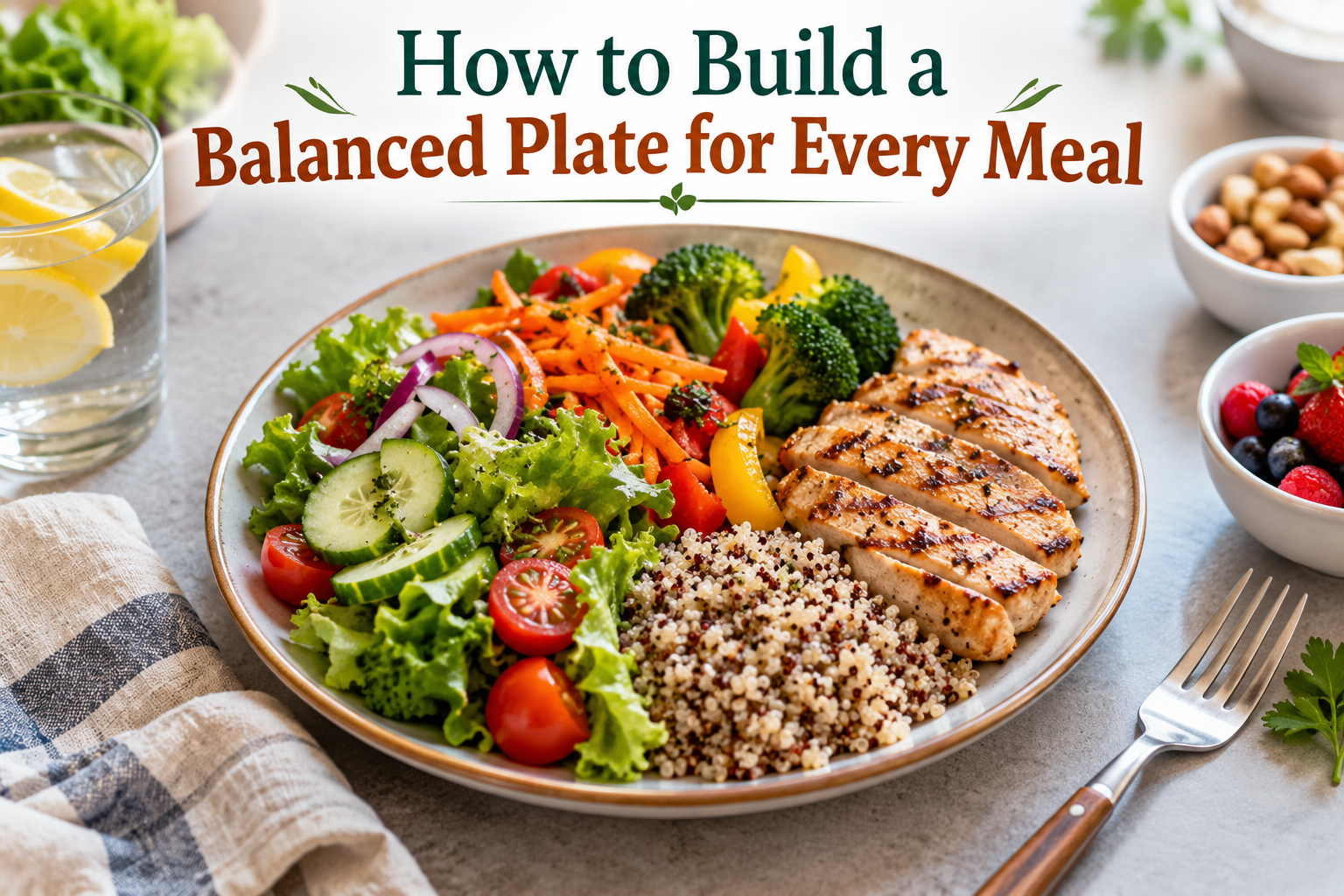
One of the simplest portion control tips for balanced eating is to think about the overall structure of your plate.
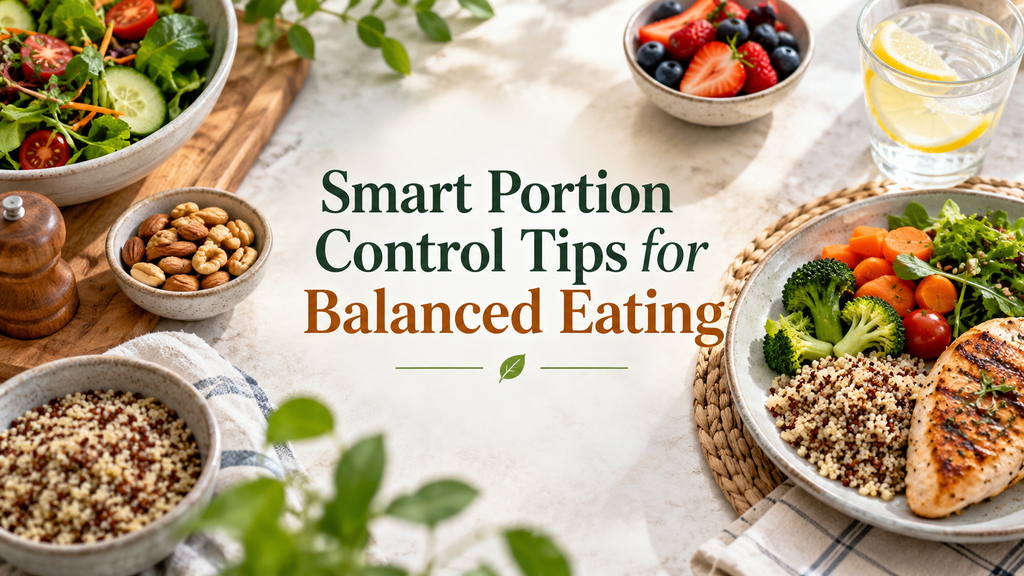
Try filling a large part of your plate with vegetables. Add a reasonable portion of protein such as chicken, fish, beans, lentils, eggs, or another preferred protein source. Complete the meal with a moderate portion of whole grains, rice, potatoes, or another carbohydrate.
This method encourages variety and naturally limits oversized portions of foods that are easy to overeat.
Vegetables are especially useful because they add volume, color, texture, vitamins, minerals, and fiber to meals. They can help make the plate look satisfying while supporting balanced nutrition.
Choose a Reasonable Plate Size
The size of your plate can influence how much food you serve yourself. When a very large plate is used, a normal portion may appear small. This can encourage people to add more food even when they do not actually need it.
Using a medium sized plate can make balanced portions look more satisfying.
This does not mean that every meal must be served on a small plate. The idea is simply to choose dishes that make it easier to recognize sensible portions.
Bowls also deserve attention. Large bowls can hold surprisingly big amounts of cereal, pasta, snacks, and desserts. Selecting a reasonable bowl size can help prevent accidental overeating.
Serve Food Before Sitting Down
When large serving dishes are placed directly on the dining table, it becomes very easy to take additional food simply because it is nearby.
A helpful habit is to prepare your plate in the kitchen before sitting down to eat. Serve a balanced amount and then enjoy the meal without keeping extra food within immediate reach.
If you are still genuinely hungry after finishing, you can always return for more. However, giving yourself time before taking another serving helps you decide whether you are actually hungry or simply eating because food is available.
Eat Slowly and Pay Attention to Your Meal
Eating speed has a strong influence on portion control. When meals are eaten very quickly, it becomes easier to consume more food before noticing fullness.
Slow eating gives you time to enjoy flavors, textures, and aromas while paying attention to your body’s signals.
Try taking smaller bites and chewing your food properly. Put your fork or spoon down occasionally instead of preparing the next bite immediately.
A meal does not need to become a long ceremony. Simply reducing the rush can make eating more satisfying.
When food is enjoyable and attention is focused on the meal, a reasonable portion often feels more satisfying than a larger meal eaten quickly.
Avoid Eating Directly From Packages
Eating chips, crackers, nuts, biscuits, or other snacks directly from a large package can make portion control difficult.
It is easy to continue eating because there is no clear visual indication of how much has already been consumed.
Instead, place the amount you want to eat in a small bowl or on a plate. Put the remaining package away before you begin eating.
This creates a natural stopping point and helps you become more aware of the portion in front of you.
The same technique can be useful with healthy foods such as nuts and dried fruit. These foods can be nutritious, but they are also concentrated sources of energy, so reasonable portions are important.
Include Protein in Your Meals
Protein can make meals feel more complete and satisfying. Eggs, beans, lentils, fish, chicken, yogurt, cottage cheese, and other protein foods can be included depending on personal preferences.
Adding protein to meals may help prevent the feeling that something is missing from the plate.
Breakfast is a good example. A meal containing only a sweet pastry may not feel as satisfying as a breakfast that includes eggs, yogurt, oats, fruit, or another balanced combination.
The goal is not to eat extremely large amounts of protein. It is simply to include a sensible source as part of balanced eating.
Add More Fiber Rich Foods
Fiber is another important part of satisfying meals. Vegetables, fruits, beans, lentils, oats, whole grains, and other plant foods can provide useful amounts of dietary fiber.
Fiber rich foods often require more chewing and can add volume to the meal.
For example, instead of eating a very large portion of rice alone, you can enjoy a moderate portion of rice with vegetables, lentils, and a source of protein.
The meal becomes more varied and nutritious without depending on one food for fullness.
Learn to Recognize Hunger and Fullness
Smart portion control requires some attention to physical hunger.
Before eating, ask yourself whether you are truly hungry or simply bored, stressed, tired, or eating because food is nearby.
During the meal, notice how your hunger changes.
You do not necessarily need to continue eating until you feel extremely full. A comfortable feeling of satisfaction is usually a better stopping point.
This skill develops gradually. Many people have become used to finishing everything on their plate regardless of hunger. Learning to notice body signals can help create a healthier relationship with portions.
Do Not Skip Meals to Control Portions
Skipping meals may seem like a simple way to reduce food intake, but it can sometimes make portion control more difficult later.
When you become extremely hungry, it is much harder to eat slowly and choose reasonable portions.
Regular balanced meals can help keep hunger manageable throughout the day.
Meal timing does not need to follow one perfect schedule for everyone. Different routines work for different people. The important point is to avoid creating extreme hunger that makes thoughtful eating difficult.
Plan Snacks Instead of Grazing All Day
Snacks can be part of balanced eating when they are eaten with awareness.
Problems can develop when small amounts of food are eaten continuously throughout the day without paying attention to quantity.
Instead of repeatedly reaching into a snack cupboard, choose a planned portion and sit down to eat it.
Fruit with yogurt, vegetables with a homemade dip, a small portion of nuts, or whole grain crackers with a suitable topping are examples of simple snack combinations.
A planned snack feels more like part of your eating routine and less like unconscious grazing.
Drink Water Regularly
Water is an important part of a balanced lifestyle and can support better eating habits.
Sometimes people reach for food when they are actually thirsty or simply looking for refreshment. Keeping water available throughout the day may help you recognize the difference.
Water can also be served with meals instead of relying heavily on sugary drinks.
This does not mean drinking huge amounts of water to replace food. Water and food have different purposes. The goal is simply to stay comfortably hydrated while following normal hunger signals.
Be Careful With Liquid Calories
Some drinks can provide significant amounts of calories without creating the same satisfaction as solid food.
Sweetened drinks, flavored coffees, milk based beverages, and other high calorie drinks can easily become an unnoticed part of daily intake.
You do not necessarily need to remove every enjoyable drink from your diet. Portion awareness matters here as well.
Choosing a smaller serving or enjoying these drinks less frequently can make balanced eating easier without creating unnecessary restrictions.
Measure Certain Foods Occasionally
Although measuring every meal is unnecessary for most people, measuring common foods once in a while can improve portion awareness.
For example, you may be surprised by the actual amount represented by a serving of cereal, rice, pasta, nuts, oil, or salad dressing.
After seeing these quantities several times, you become better at estimating portions visually.
This can be especially useful when cooking at home because many ingredients are added without thinking about quantity.
A little awareness can improve portion control without making cooking complicated.
Pay Attention to Cooking Oils and Sauces
Portion control does not apply only to the food visible on your plate.
Cooking oils, creamy sauces, dressings, spreads, and toppings can also add substantial amounts of energy to meals.
These ingredients often improve flavor, so there is no need to completely avoid them. Using sensible amounts is usually enough.
Instead of pouring oil directly from the bottle without thinking, you can measure a small amount before cooking.
The same principle applies to sauces and dressings. A moderate quantity can provide plenty of flavor without overwhelming the meal.
Make Vegetables More Enjoyable
People are more likely to eat vegetables when they actually taste good.
Vegetables do not need to be plain or boring. They can be roasted, steamed, grilled, mixed into soups, added to pasta, included in rice dishes, or seasoned with herbs and spices.
When vegetables become an enjoyable part of the meal, balancing portions becomes easier.
You can reduce the amount of heavier foods without feeling that something has been taken away because the plate still contains plenty of satisfying flavors and textures.
Avoid Treating Portion Control as Punishment
A healthy approach to portion control should never feel like punishment.
Food is not only fuel. It is also connected with family, culture, celebrations, enjoyment, and everyday life.
Trying to follow extremely strict rules can make eating stressful and difficult to maintain.
Balanced eating allows flexibility. Some meals will naturally be larger than others, especially during celebrations, restaurant visits, or special occasions.
One large meal does not destroy healthy eating habits. What matters more is the overall pattern across days and weeks.
Be Mindful When Eating at Restaurants
Restaurant portions can sometimes be larger than what you would normally serve at home.
You do not have to finish everything simply because it is on the plate.
Eat slowly and stop when you feel satisfied. Leftovers can often be saved for another meal.
You can also share certain dishes when appropriate or choose meals that contain a good balance of vegetables, protein, and carbohydrates.
Restaurant food can still fit into a balanced lifestyle when portion awareness is maintained.
Keep Healthy Foods Easy to Reach
Your environment can influence your eating decisions.
Keeping fruit, vegetables, yogurt, whole grains, and other nutritious foods easy to see and access can support healthier choices.
At the same time, foods that are easy to overeat can be stored in less visible places or divided into individual portions.
This is not about labeling foods as good or bad. It is simply about creating an environment that makes your preferred habits easier to follow.
Allow Yourself to Enjoy Favorite Foods
Balanced eating should leave room for enjoyment.
Trying to completely eliminate every dessert, snack, or comfort food can make healthy eating feel unnecessarily restrictive.
Instead, practice portion awareness.
Enjoy a reasonable amount of your favorite food and focus on the experience. Eat it slowly and appreciate it rather than feeling guilty.
A smaller portion enjoyed with attention can often be more satisfying than a larger amount eaten automatically.
Build Consistency Instead of Seeking Perfection
One of the most important smart portion control tips for balanced eating is to focus on consistency.
You do not need perfect portions at every meal.
Some days you may feel hungrier because of increased activity, changes in routine, or other normal factors. On other days you may naturally want less food.
Balanced eating allows you to respond to these changes.
The goal is to build habits that can be maintained for years, not rules that only work for a few days.
Final Thoughts
Smart portion control is about awareness, balance, and consistency rather than strict restriction. Simple habits such as using reasonable plate sizes, eating slowly, including vegetables and protein, serving snacks in bowls, staying hydrated, and paying attention to hunger signals can gradually improve the way you eat.
Balanced eating becomes much easier when you stop thinking of portion control as eating less and start thinking of it as eating the right amount for your needs.
There is no need to make every change at once. Start with one or two portion control tips that fit easily into your daily routine. Once they become natural, add another healthy habit.
Over time, these small choices can help create meals that are satisfying, nutritious, enjoyable, and easier to manage. The best eating habits are usually not the most complicated ones. They are the simple habits that you can comfortably continue as part of everyday life.