Starting a vegetarian lifestyle can feel exciting, but it can also be confusing when you are not sure what to cook. Many beginners think vegetarian meals require expensive ingredients, complicated recipes, or special cooking skills. In reality, some of the healthiest vegetarian recipes are made with simple foods that are already available in most kitchens.
When I first started learning more about healthy eating, I noticed that vegetarian cooking becomes much easier when meals are built around familiar ingredients. Vegetables, beans, lentils, rice, oats, potatoes, yogurt, eggs, whole grains, fruits, nuts, and seeds can be turned into satisfying meals without much effort. The main goal is to create food that provides a good balance of protein, fiber, healthy fats, vitamins, minerals, and carbohydrates.
These healthy vegetarian recipes for beginners are simple enough for everyday cooking and flexible enough to suit different tastes. You do not need to completely change the way you eat overnight. Starting with a few easy recipes can make the process much more enjoyable.
Why Vegetarian Meals Can Be a Healthy Choice
A well planned vegetarian diet can include a wide variety of nutritious foods. Vegetables and fruits provide vitamins, minerals, antioxidants, and fiber. Beans and lentils provide plant based protein along with important nutrients such as iron and folate. Whole grains provide energy and fiber, while nuts and seeds can add healthy fats and extra protein.
The key is variety. Eating only salads or plain vegetables will probably leave you hungry and may not provide everything your body needs. A satisfying vegetarian meal should normally include a protein source, vegetables, a source of carbohydrates, and a small amount of healthy fat.
For beginners, there is no need to make every meal complicated. A bowl of rice with beans and vegetables can be just as useful as a recipe with a long list of ingredients.
1. Vegetable and Egg Breakfast Scramble
A vegetable and egg scramble is one of the easiest healthy vegetarian recipes for beginners. It takes only a few minutes and works well for breakfast or even a quick lunch.
Start by chopping vegetables such as onion, tomato, spinach, bell pepper, or mushrooms. Heat a small amount of olive oil in a pan and cook the vegetables until they become slightly soft.
Beat two eggs in a bowl and pour them over the vegetables. Stir gently until the eggs are cooked.
You can serve the scramble with whole grain toast, fresh fruit, or a small bowl of yogurt.
Eggs provide protein, while vegetables add fiber and useful nutrients. If you prefer a plant based version, scrambled tofu can be used instead of eggs.
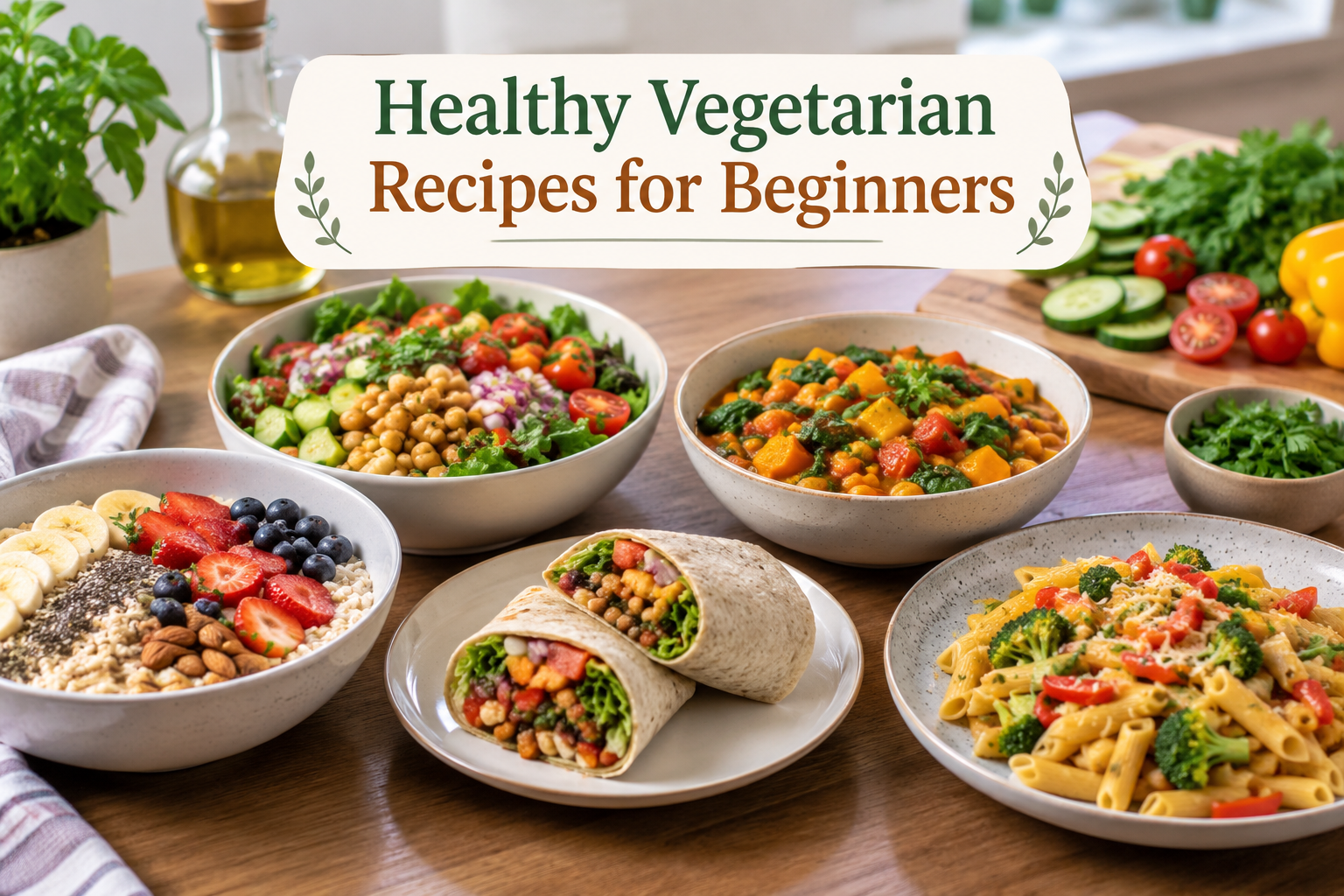
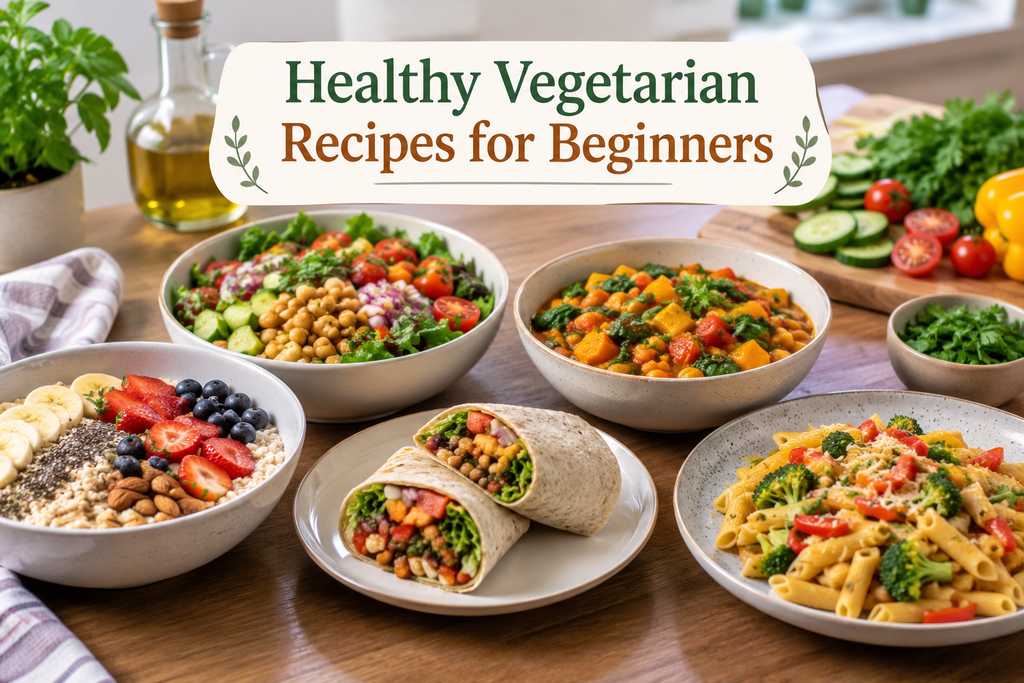
2. Simple Chickpea Salad Bowl
Chickpeas are useful for beginners because they are affordable, filling, and easy to prepare. Canned chickpeas can also save a lot of cooking time.
To make a simple chickpea salad, combine cooked chickpeas with chopped cucumber, tomato, onion, lettuce, and fresh herbs.
Add a dressing made with lemon juice, olive oil, black pepper, and a small amount of salt.
For extra flavor, you can include yogurt, avocado, roasted seeds, or a little cheese.
This meal contains plant protein, fiber, healthy fats, and fresh vegetables. It can also be prepared in advance and stored in the refrigerator for a convenient lunch.
3. Lentil and Vegetable Soup
Lentil soup is one of my favorite examples of how simple ingredients can become a comforting and nutritious meal.
Begin by cooking chopped onion, garlic, carrot, and tomato in a pot with a small amount of oil. Add washed lentils, water or vegetable stock, and seasonings such as cumin, black pepper, turmeric, or paprika.
Let everything simmer until the lentils become soft. Depending on the type of lentils you use, cooking time may vary.
Spinach or other leafy vegetables can be added near the end of cooking.
Serve your lentil soup with whole grain bread or brown rice if you want a more filling meal.
Lentils contain both protein and fiber, which makes them especially useful in vegetarian cooking.
4. Healthy Vegetable Rice Bowl
A rice bowl is perfect when you want a flexible meal without following a complicated recipe.
Start with cooked brown rice or another whole grain. Add vegetables such as broccoli, carrots, peas, spinach, zucchini, or bell peppers.
Next, include a protein source. Chickpeas, beans, tofu, lentils, eggs, or cottage cheese can all work well.
Finish with a simple sauce made from yogurt and herbs, lemon juice, or a small amount of tahini.
One advantage of rice bowls is that you can use whatever ingredients you already have at home. This can reduce food waste and make healthy eating more practical.
5. Easy Bean and Vegetable Wrap
Vegetarian wraps are quick, portable, and easy to customize.
Take a whole grain tortilla and fill it with cooked black beans, kidney beans, or chickpeas. Add lettuce, chopped tomato, cucumber, grated carrot, and avocado.
A spoonful of plain yogurt can add creaminess without requiring a heavy sauce.
Roll the tortilla carefully and serve it immediately.
This recipe is particularly useful for busy days because most of the ingredients can be prepared ahead of time. You can also pack the wrap for work, school, or travel.
6. Oatmeal With Fruit and Nuts
Healthy vegetarian recipes are not limited to lunch and dinner. A nutritious breakfast can also be very simple.
Cook oats with milk, plant based milk, or water until they become soft and creamy.
Add sliced banana, apple, berries, or another fruit you enjoy. Sprinkle a small amount of almonds, walnuts, chia seeds, or pumpkin seeds on top.
For natural sweetness, ripe banana or a few chopped dates can be used instead of adding large amounts of sugar.
Oats provide fiber and steady energy, while fruit adds flavor and vitamins. Nuts and seeds add healthy fats and make the meal more satisfying.
7. Baked Potato With Beans and Vegetables
Potatoes are sometimes treated as unhealthy food, but much depends on how they are prepared and what you eat with them.
Instead of deep frying potatoes, bake them until they are tender. Cut the baked potato open and fill it with beans, corn, chopped tomato, spinach, or steamed vegetables.
Add plain yogurt or a small amount of cheese for additional flavor.
A baked potato meal is simple, inexpensive, and comforting. It also gives beginners a familiar base for experimenting with new vegetarian ingredients.
8. Vegetable Pasta With Tomato Sauce
Pasta can easily become part of a balanced vegetarian meal when it is combined with plenty of vegetables and a simple sauce.
Cook whole grain pasta according to the package instructions.
In another pan, cook garlic, onion, tomato, zucchini, spinach, mushrooms, or bell peppers. Add tomato sauce and season with herbs such as basil, parsley, or oregano.
Mix the cooked pasta with the vegetable sauce.
For more protein, add cooked lentils, chickpeas, white beans, or a small amount of cheese.
This is an excellent beginner recipe because it uses familiar flavors while introducing more vegetables into the meal.
9. Vegetable and Chickpea Curry
A simple vegetarian curry can be surprisingly easy to prepare.
Cook chopped onion and garlic in a small amount of oil. Add tomato, chickpeas, and vegetables such as cauliflower, peas, spinach, potatoes, or carrots.
Season the mixture with turmeric, cumin, coriander, and a small amount of curry powder.
Add some water and allow everything to simmer until the vegetables are tender.
Serve the curry with brown rice or whole grain flatbread.
You can adjust the spices according to your preference. Beginners who do not enjoy spicy food can use mild seasonings while still creating a flavorful meal.
10. Yogurt and Fruit Breakfast Bowl
On mornings when you do not have time to cook, a yogurt bowl can be prepared in only a few minutes.
Add plain yogurt to a bowl and top it with fresh fruit, oats, nuts, seeds, and a small amount of cinnamon.
This combination provides protein, calcium, carbohydrates, fiber, and healthy fats.
Choosing plain yogurt instead of heavily sweetened varieties also gives you more control over added sugar.
For people following a completely plant based diet, a fortified plant based yogurt can be used instead.
11. Simple Vegetable Stir Fry
A vegetable stir fry is one of the best recipes for learning basic vegetarian cooking.
Choose three or four vegetables such as broccoli, carrots, bell peppers, mushrooms, cabbage, or peas.
Cook them in a hot pan with a small amount of oil. Add garlic, ginger, black pepper, and a little soy sauce for flavor.
To turn the vegetables into a complete meal, add tofu, chickpeas, or another protein source.
Serve with brown rice or noodles.
The vegetables should remain slightly firm instead of being cooked until completely soft. This helps maintain a pleasant texture and makes the meal more enjoyable.
12. Homemade Vegetarian Bean Soup
Beans are another excellent ingredient for beginner vegetarian meals.
Combine beans with chopped tomatoes, carrots, celery, onion, garlic, and vegetable stock. Season with herbs and black pepper.
Cook until the vegetables are soft and the flavors have blended together.
You can use kidney beans, white beans, black beans, or a mixture of several varieties.
Make a large pot and store portions in the refrigerator for future meals. Homemade soup can be especially convenient when you are too busy to cook every day.
How to Make Vegetarian Meals More Filling
One common mistake beginners make is eating vegetables without enough protein, healthy fats, or carbohydrates. This can make you feel hungry soon after eating.
Try combining different food groups in each meal.
For example, instead of eating only a vegetable salad, add chickpeas, beans, eggs, tofu, cheese, nuts, or seeds. You can also include brown rice, quinoa, potatoes, whole grain bread, or another source of carbohydrates.
Adding avocado, olive oil, tahini, nuts, or seeds in reasonable amounts can provide healthy fats and improve flavor.
Balanced meals are usually easier to maintain than very restrictive eating plans.
Useful Ingredients for Beginner Vegetarian Cooking
Keeping a few basic ingredients at home can make vegetarian cooking much easier.
Beans and lentils are useful because they can be added to soups, curries, salads, pasta dishes, and rice bowls.
Rice, oats, whole grain pasta, potatoes, and whole grain bread provide convenient carbohydrate options.
Frozen vegetables can also be valuable. They are easy to store and can quickly be added to soups, stir fries, curries, and rice dishes.
Eggs, yogurt, cheese, tofu, nuts, and seeds provide additional options for protein and healthy fats depending on the type of vegetarian diet you follow.
Fresh herbs, garlic, lemon juice, spices, and simple sauces can help keep meals interesting without making recipes complicated.
Tips for Vegetarian Beginners
Do not feel that you must prepare completely new meals every day. Start by modifying foods you already enjoy.
If you normally eat pasta with meat, try lentils or beans instead. If you enjoy tacos, use black beans and vegetables as the filling. If rice dishes are already part of your routine, add chickpeas, lentils, eggs, or tofu along with vegetables.
Planning a few meals before grocery shopping can also make the process easier. Choose recipes that share ingredients so nothing is wasted.
For example, spinach can be used in scrambled eggs, lentil soup, pasta, curry, and rice bowls. Chickpeas can be used in salads, wraps, soups, and curries.
Small changes are often more practical than trying to completely rebuild your diet at once.
Final Thoughts
Healthy vegetarian recipes for beginners do not need to be expensive, complicated, or time consuming. Some of the best meals are created from basic foods such as beans, lentils, vegetables, whole grains, eggs, yogurt, fruits, nuts, and seeds.
The most important step is learning how to combine these foods into balanced meals that are both nutritious and enjoyable.
Start with simple recipes such as chickpea salads, lentil soup, vegetable pasta, rice bowls, wraps, oatmeal, stir fries, and baked potatoes. Once you become comfortable with these basics, you can gradually experiment with different vegetables, spices, grains, and plant based protein sources.
Healthy eating becomes much easier when the food actually tastes good and fits naturally into your daily routine. Vegetarian cooking offers plenty of room for creativity, but beginners do not need to master everything at once. A few simple meals prepared regularly can be the foundation of a balanced and enjoyable way of eating.