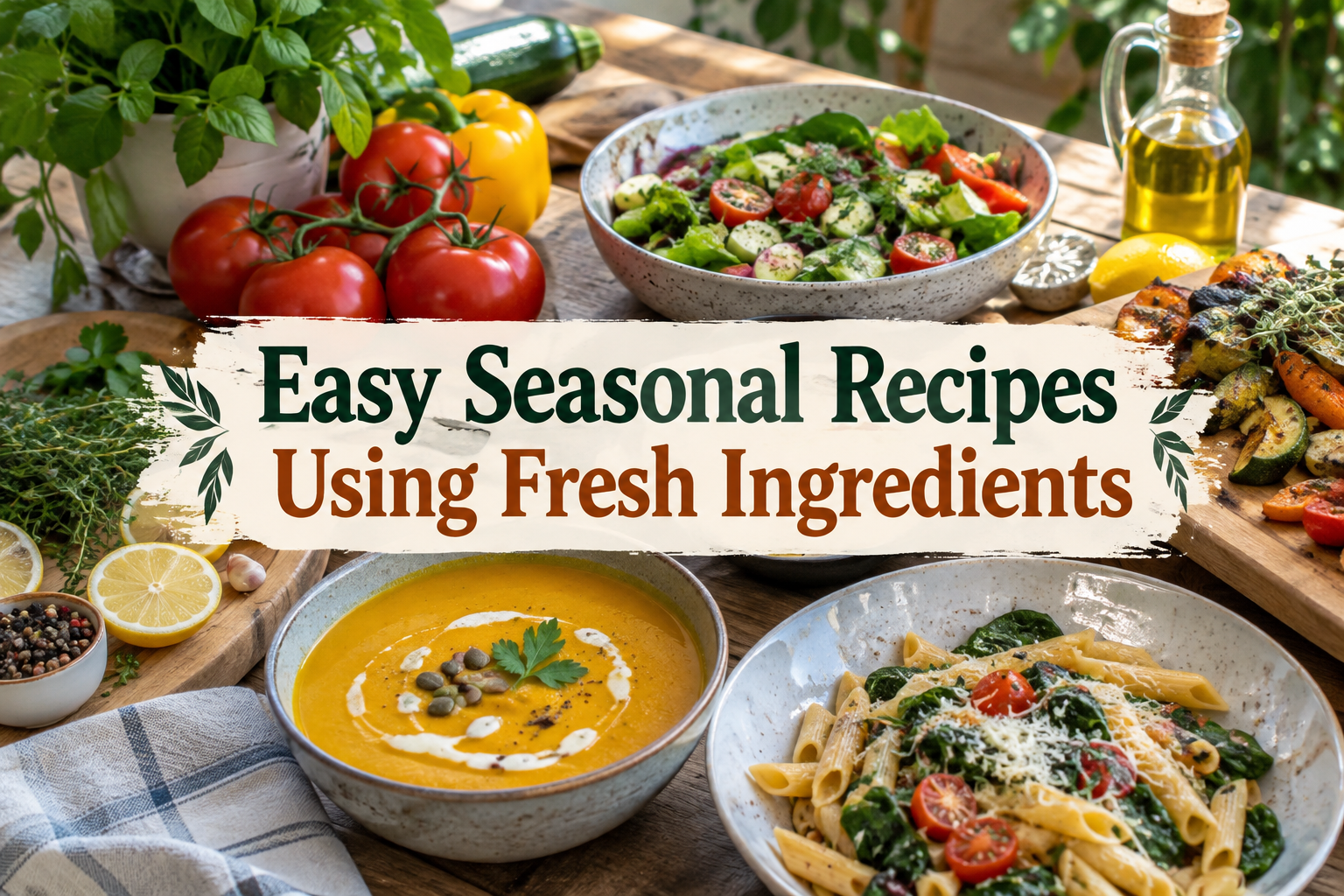
Cooking with fresh seasonal ingredients is one of the simplest ways to make everyday meals taste better. When fruits and vegetables are naturally in season, they often have better flavor, appealing texture, and good nutritional value. They can also be easier to find at local markets and grocery stores. This makes seasonal cooking a practical choice for families, busy professionals, and anyone who enjoys simple homemade food.
I have always felt that good cooking does not need to be complicated. A few fresh ingredients, basic herbs, and a simple cooking method can create a meal that feels satisfying and wholesome. Easy seasonal recipes using fresh ingredients allow us to enjoy food at its natural best while keeping meal preparation manageable.
Instead of depending on the same vegetables and fruits throughout the year, seasonal cooking gives us a reason to change our meals as the weather changes. Spring brings fresh greens and tender vegetables. Summer offers juicy fruits and colorful produce. Autumn introduces pumpkins, apples, and hearty vegetables. Winter is perfect for warming soups, roasted vegetables, and filling meals.
Why Seasonal Ingredients Make Cooking Better
Seasonal ingredients are usually harvested when they are naturally ready to eat. This often means they have developed their full flavor before reaching the kitchen.
A ripe summer tomato, for example, can taste sweet and rich without needing much seasoning. Fresh strawberries can be enjoyable on their own or with a little yogurt. Winter root vegetables become naturally sweet when roasted.
Using ingredients during their natural season can also encourage variety in the diet. Instead of preparing the same dishes repeatedly, we get opportunities to experiment with different vegetables, fruits, grains, herbs, and cooking methods.
Seasonal cooking can also help reduce unnecessary complexity. When an ingredient already tastes good, there is less need for heavy sauces or complicated preparation.
Fresh Spring Vegetable Pasta
Spring is a wonderful season for light and colorful meals. Fresh peas, spinach, asparagus, herbs, and other green vegetables can easily become part of simple recipes.
One of my favorite spring meal ideas is fresh vegetable pasta.
Cook your preferred whole grain or regular pasta according to the package instructions. While the pasta cooks, lightly sauté chopped garlic in a small amount of olive oil. Add sliced asparagus, fresh peas, spinach, and a little black pepper.
Cook the vegetables only until they become tender. They should still have some texture and a bright appearance.
Add the cooked pasta to the vegetables and mix everything together. A small squeeze of fresh lemon juice can brighten the flavor. Fresh parsley or basil can also be added before serving.
This is an easy seasonal recipe because it does not require a heavy sauce. The fresh vegetables provide most of the flavor.
Simple Summer Tomato and Cucumber Salad
Summer meals often taste best when they are light and refreshing. Tomatoes and cucumbers are perfect ingredients for this type of cooking.
For a quick summer salad, chop fresh tomatoes, cucumber, onion, and parsley. Place everything in a bowl and add a small amount of olive oil and fresh lemon juice.
Season with black pepper and a light pinch of salt. Mix gently and serve immediately.
You can also add chickpeas or cooked beans if you want to turn the salad into a more filling meal.
The key to this recipe is choosing ripe tomatoes. Their natural sweetness works beautifully with the fresh cucumber and lemon.
Fresh Berry Yogurt Breakfast Bowl
Fresh berries are among the easiest seasonal fruits to use in homemade meals. Strawberries, blueberries, raspberries, and blackberries can be added to many breakfast dishes.
A simple yogurt bowl requires only a few ingredients.
Add plain yogurt to a bowl and top it with fresh seasonal berries. Sprinkle some oats, chopped nuts, seeds, or homemade granola on top.
If additional sweetness is needed, a small amount of honey can be added.
This breakfast requires almost no cooking, yet it contains different textures and naturally fresh flavors. It is especially refreshing during warm weather.
Summer Vegetable Rice Bowl
A rice bowl is another simple way to use seasonal vegetables.
Start with cooked brown rice, white rice, or another grain you enjoy. Prepare fresh vegetables such as zucchini, bell peppers, tomatoes, corn, and spinach.
Lightly sauté the vegetables until tender. Place the cooked rice in a bowl and arrange the vegetables on top.
You can add grilled chicken, beans, lentils, tofu, or a boiled egg for additional protein.
Finish the bowl with fresh herbs and a simple dressing made with lemon juice and olive oil.
Rice bowls are helpful because the ingredients can easily be changed depending on what is available.
Autumn Pumpkin Soup
As the weather becomes cooler, warm homemade soup becomes more appealing. Pumpkin is one of the classic ingredients of autumn and works well in simple soups.
Start by cooking chopped onion and garlic in a pot with a small amount of olive oil. Add fresh pumpkin pieces and chopped carrots.
Pour in enough vegetable or chicken stock to cover the vegetables. Let everything simmer until the pumpkin and carrots become soft.
Blend the soup until smooth. Add black pepper, a little salt, and a small amount of ground cumin or ginger for extra flavor.
The pumpkin creates a naturally creamy texture, so a large amount of cream is not necessary.
Serve the soup warm with whole grain bread or a fresh side salad.
Roasted Autumn Vegetables
Roasting is one of the easiest ways to prepare seasonal vegetables because the oven does most of the work.
Choose vegetables such as pumpkin, carrots, sweet potatoes, onions, cauliflower, or Brussels sprouts.
Cut everything into similar sized pieces and place them on a baking tray. Add a small amount of olive oil along with black pepper, garlic, rosemary, or another favorite herb.
Roast until the vegetables become tender and lightly browned.
Roasting brings out natural sweetness and creates a deeper flavor. The vegetables can be served as a side dish or added to salads, grain bowls, wraps, and pasta.
Apple and Oat Breakfast
Fresh apples are especially enjoyable during autumn. They are naturally sweet and can be used in both simple breakfasts and desserts.
For an easy breakfast, cook oats with milk or water. While the oats cook, chop a fresh apple into small pieces.
Add the apple to the oats along with cinnamon. Continue cooking until the apple becomes slightly soft.
Top the finished oatmeal with chopped walnuts, almonds, or pumpkin seeds.
This breakfast is warm, comforting, and easy to prepare with basic ingredients.
Winter Lentil and Vegetable Soup
Winter is a good time for hearty soups made with vegetables and legumes.
Lentil soup is inexpensive, filling, and simple enough for everyday cooking.
Cook chopped onion, carrots, celery, and garlic in a large pot. Add rinsed lentils, chopped tomatoes, and vegetable stock.
You can also include seasonal winter vegetables such as spinach, cabbage, potatoes, or cauliflower.
Season with cumin, black pepper, paprika, and fresh herbs.
Let the soup simmer until the lentils are soft and the vegetables are fully cooked.
A large pot can provide several portions, making this recipe useful for meal preparation.
Simple Winter Roasted Sweet Potatoes
Sweet potatoes are easy to prepare and work well in many winter meals.
Wash and peel the sweet potatoes if desired, then cut them into cubes or wedges.
Place them on a baking tray and add a small amount of olive oil, black pepper, paprika, and garlic powder.
Roast until the edges are slightly crisp and the inside becomes soft.
Roasted sweet potatoes can be served with grilled vegetables, beans, eggs, chicken, or a fresh salad.
They can also be used as the base of a simple grain bowl.
Seasonal Fruit Salad
Fruit salad can change throughout the year depending on what is fresh.
During summer, a fruit salad may include watermelon, berries, peaches, plums, or mangoes. During colder months, apples, pears, oranges, and other available fruits can be used.
Cut the fruits into bite sized pieces and combine them gently in a large bowl.
Fresh lemon or orange juice can be added for extra flavor.
There is usually no need to add refined sugar because ripe fruit already provides natural sweetness.
A seasonal fruit salad can be enjoyed as breakfast, a snack, or a light dessert.
Fresh Herb Omelet
Fresh herbs can completely change the flavor of simple foods.
An herb omelet is one of the fastest seasonal recipes to prepare.
Beat two eggs in a bowl and add chopped parsley, spinach, coriander, chives, or another fresh herb.
Pour the mixture into a lightly greased pan and cook over medium heat.
Fresh tomatoes, mushrooms, onions, or peppers can also be included.
Serve the omelet with whole grain toast and fresh vegetables for a simple breakfast or lunch.
How to Shop for Seasonal Ingredients
Seasonal cooking becomes easier when shopping habits are flexible.
Instead of planning every meal around a specific vegetable, look at what appears fresh and abundant when you shop. Produce that is in season is often displayed more prominently because it is readily available.
Local markets can also be useful places to discover seasonal foods.
Look for fruits and vegetables that appear firm, fresh, and naturally colorful. Avoid buying more than you can realistically use before it becomes overripe.
Planning meals around a few flexible ingredients can reduce food waste. A basket of fresh tomatoes, for example, can be used in salads, pasta, sandwiches, soups, and rice bowls.
Keep Seasonal Recipes Simple
Fresh ingredients often need very little preparation.
Roasting, steaming, grilling, sautéing, and baking are all simple techniques that allow natural flavors to remain noticeable.
Fresh herbs, garlic, lemon juice, spices, and small amounts of olive oil can add flavor without covering the taste of the main ingredients.
I think one of the biggest mistakes in home cooking is assuming that delicious meals must contain many ingredients. Some of the best dishes are built around only a few carefully chosen foods.
A ripe tomato with herbs can be more enjoyable than an overly complicated recipe. Roasted vegetables can taste wonderful with only basic seasoning. Fresh fruit can become a satisfying dessert without additional sugar.
Plan Meals Around the Seasons
Creating a basic seasonal meal plan can make healthy home cooking easier.
In spring, focus on fresh greens, peas, asparagus, herbs, and lighter meals.
During summer, make use of tomatoes, cucumbers, berries, peaches, melons, zucchini, and other colorful produce.
Autumn is perfect for pumpkin, apples, sweet potatoes, carrots, and warming spices.
Winter meals can include root vegetables, cabbage, cauliflower, citrus fruits, lentils, beans, and comforting soups.
This does not mean every ingredient must always be local or seasonal. The goal is simply to make fresh seasonal produce a bigger part of everyday meals whenever it is practical.
Benefits of Cooking at Home With Fresh Ingredients
Cooking at home gives you greater control over what goes into your meals.
You can decide how much salt, oil, sugar, and seasoning to use. You can also choose fresh vegetables, whole grains, lean proteins, legumes, and fruits according to your personal preferences.
Homemade seasonal meals can be adapted for different family members as well. Spices can be adjusted, vegetables can be changed, and portions can be prepared according to individual needs.
Cooking with fresh ingredients can also make meals feel more enjoyable because the colors, aromas, and textures change throughout the year.
Reduce Food Waste With Flexible Recipes
One advantage of seasonal recipes is that they are easy to adapt.
If a recipe suggests spinach but you already have another leafy vegetable in the refrigerator, use what you have. If a recipe includes zucchini but another seasonal vegetable is more readily available, make the substitution.
Leftover roasted vegetables can become part of a sandwich or salad the next day. Cooked grains can be added to soups. Ripe fruit can be blended into smoothies or added to oatmeal.
Being flexible makes home cooking more economical and helps prevent perfectly good food from being thrown away.
Final Thoughts
Easy seasonal recipes using fresh ingredients can make everyday cooking simpler, more varied, and more enjoyable. Seasonal foods naturally encourage us to change our meals throughout the year and discover different flavors.
You do not need advanced cooking skills or expensive ingredients to enjoy seasonal eating. Start with the fresh produce that is easily available, choose a simple cooking method, and allow the natural flavors to remain the main focus.
A fresh summer salad, warm autumn pumpkin soup, roasted winter vegetables, or colorful spring pasta can all become part of a practical home cooking routine.
The most important thing is to keep the process simple. Buy ingredients you enjoy, prepare them with care, and build meals around what each season naturally offers. With this approach, fresh seasonal cooking can become an easy and satisfying part of everyday life.