Eating a balanced diet does not always require complicated recipes or expensive ingredients. Some of the healthiest meals can be prepared with simple foods such as vegetables, fruits, whole grains, beans, lentils, nuts, and seeds. Plant based meals are a practical way to add more natural foods to the daily diet while enjoying a wide variety of flavors and textures.
I have always found that healthy eating becomes easier when meals are simple. Instead of focusing on strict food rules, it is more useful to think about what can be added to a plate. A bowl of brown rice becomes more satisfying with beans and vegetables. Oatmeal becomes more nutritious with fruit, nuts, and seeds. Even a simple salad can become a complete meal when it includes chickpeas, whole grains, or another source of plant protein.
Simple plant based meals for a balanced diet can fit into almost any lifestyle. They can be prepared for breakfast, lunch, dinner, or even quick snacks. The main goal is to choose a good combination of carbohydrates, protein, healthy fats, vegetables, and fruits.
What Is a Plant Based Diet?
A plant based diet mainly focuses on foods that come from plants. This includes vegetables, fruits, grains, beans, peas, lentils, nuts, seeds, herbs, and spices.
For some people, plant based eating means avoiding all animal products. For others, it simply means making plant foods the main part of their meals. The important idea is to eat more whole and minimally processed foods.
A balanced plant based meal can provide carbohydrates for energy, plant protein for fullness, healthy fats for satisfaction, and many essential vitamins and minerals. Variety is important because different foods offer different nutrients.
Instead of eating the same vegetables every day, I prefer changing ingredients according to what is available. Carrots, spinach, tomatoes, cabbage, cucumbers, sweet potatoes, peas, and seasonal vegetables can all be used in different combinations.
Start the Day With a Balanced Plant Based Breakfast
Breakfast is one of the easiest meals to make plant based.
A bowl of oatmeal is a simple example. Cook oats with water or plant milk and add sliced banana, berries, chopped apple, or another favorite fruit. A small amount of nuts, seeds, or natural nut butter can make the meal more satisfying.
Oats contain carbohydrates and fiber, while nuts and seeds provide healthy fats and some protein. Fruit adds natural sweetness without needing large amounts of added sugar.
Another easy breakfast is whole grain toast topped with mashed avocado and tomato. Adding a side of fruit can make it more complete.
For people who prefer savory breakfasts, chickpeas can also be cooked with tomatoes, onions, spinach, and mild spices. This can be served with whole grain bread.
The best breakfast does not need to be complicated. It simply needs enough variety to provide lasting energy and satisfaction.
Simple Chickpea and Vegetable Bowl
One of my favorite ideas for a quick plant based lunch is a chickpea and vegetable bowl.
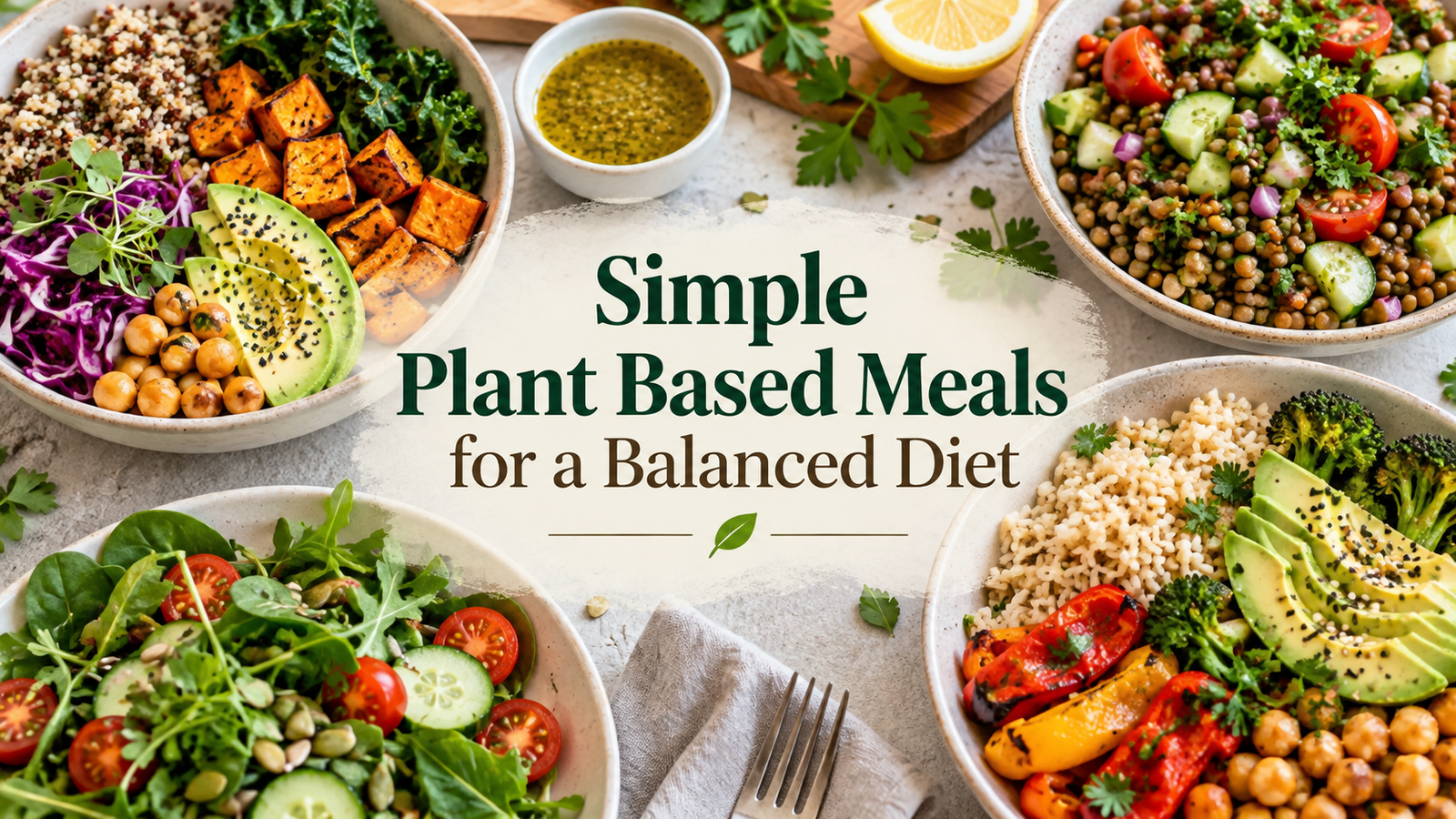
Start with a base of brown rice, quinoa, barley, or another whole grain. Add cooked chickpeas and a selection of vegetables. Cucumbers, tomatoes, carrots, spinach, cabbage, bell peppers, and roasted vegetables all work well.
A simple dressing can be made with lemon juice, olive oil, herbs, and a small amount of seasoning.
This meal works because each ingredient has a purpose. Whole grains provide carbohydrates, chickpeas provide plant protein and fiber, vegetables provide vitamins and minerals, and olive oil adds healthy fat.
It is also easy to prepare in advance. Cook a batch of grains and chickpeas and store them in the refrigerator. During busy days, a balanced meal can then be assembled within minutes.
Lentil Soup for a Comforting Meal
Lentils are one of the most useful ingredients in plant based cooking. They are affordable, easy to prepare, and work well with many vegetables.
A simple lentil soup can include lentils, carrots, onions, tomatoes, celery, spinach, and your favorite herbs and spices.
Cook everything together until the lentils and vegetables become tender. The result is a warm and filling meal that works especially well for lunch or dinner.
Lentils provide plant protein and fiber. Adding vegetables makes the soup more colorful and nutritious.
I like serving lentil soup with a piece of whole grain bread or a small side salad. This creates a satisfying meal without requiring complicated preparation.
Vegetable and Bean Wraps
Wraps are another practical choice for simple plant based meals.
Use a whole grain tortilla and fill it with beans, lettuce, tomatoes, cucumbers, carrots, avocado, and other vegetables.
Black beans, kidney beans, white beans, and chickpeas can all be used. You can also add homemade hummus for extra flavor and creaminess.
The best thing about wraps is that they are flexible. Leftover vegetables can easily become the filling for the next day’s lunch.
Try not to overload the wrap with sauces. Fresh herbs, lemon juice, avocado, or hummus can provide plenty of flavor without making the meal too heavy.
Brown Rice With Beans and Vegetables
Rice and beans are simple ingredients, but together they can form the base of a balanced meal.
Use brown rice when possible because it contains more fiber than heavily refined rice. Add black beans, kidney beans, chickpeas, or another favorite bean.
Then add cooked or fresh vegetables. Tomatoes, corn, spinach, peppers, carrots, peas, and broccoli are all good choices.
Season the meal with garlic, herbs, lemon juice, pepper, or spices according to personal preference.
This type of meal is especially useful for families because each person can choose their own toppings. It also uses affordable ingredients that can often be stored for a long time.
Easy Vegetable Stir Fry
A vegetable stir fry is perfect when there are several vegetables in the refrigerator that need to be used.
Broccoli, carrots, cabbage, mushrooms, bell peppers, onions, peas, and green beans can all be cooked together.
Use a small amount of cooking oil and avoid cooking the vegetables for too long. Keeping some texture makes the meal more enjoyable.
Serve the vegetables with brown rice, quinoa, or whole grain noodles. Add tofu, chickpeas, beans, or lentils if more protein is needed.
Garlic, ginger, herbs, and spices can create plenty of flavor without needing large amounts of heavy sauces.
Sweet Potato and Bean Bowl
Sweet potatoes provide natural sweetness and work beautifully with beans and vegetables.
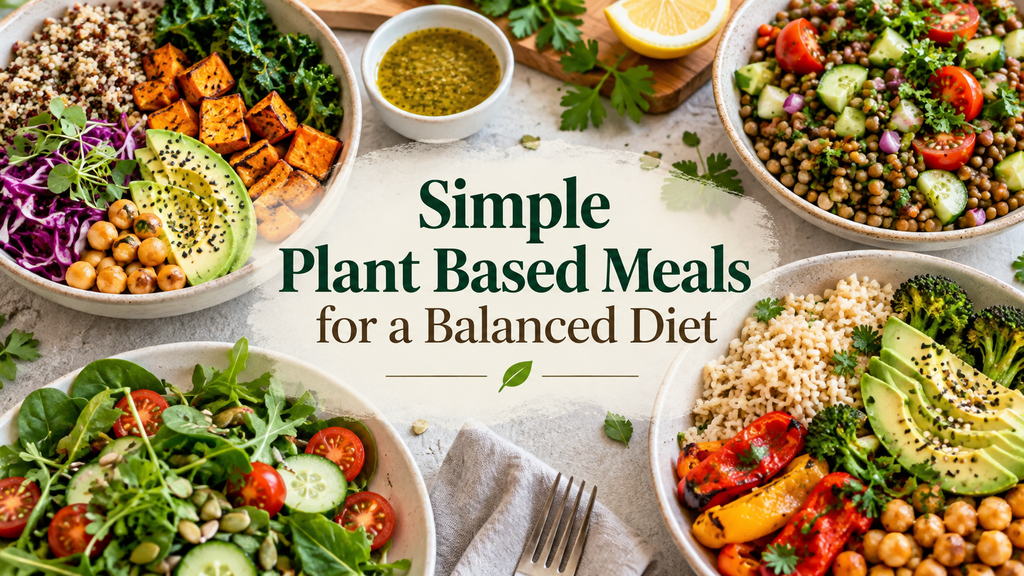
Bake or roast a sweet potato until soft. Add black beans or chickpeas, leafy greens, tomatoes, corn, avocado, and a little lemon or lime juice.
The combination of sweet potato, beans, and vegetables provides different textures and flavors in one bowl.
It is also a good example of how healthy food can still feel comforting. Balanced eating does not mean eating plain salads every day. Warm grains, roasted vegetables, beans, soups, and potatoes can all be included.
Whole Grain Pasta With Vegetables
Pasta can easily become part of a balanced plant based diet.
Choose whole grain pasta and combine it with plenty of vegetables. Tomatoes, spinach, mushrooms, zucchini, broccoli, and peppers work especially well.
A simple tomato sauce with garlic, herbs, and vegetables can provide plenty of flavor.
Beans or lentils can also be added to the sauce for extra plant protein. Lentils work particularly well because they blend naturally into tomato based pasta dishes.
Keeping the portion of pasta reasonable while adding generous amounts of vegetables is an easy way to create a more balanced plate.
Plant Based Snacks Can Be Simple Too
Balanced eating includes snacks as well as main meals.
Fruit with a small handful of nuts is one of the easiest options. Apple slices with natural peanut butter can also be satisfying.
Carrot and cucumber sticks with hummus are another simple choice.
Roasted chickpeas can be prepared with mild spices for a crunchy snack. Homemade popcorn can also fit into a balanced diet when it is prepared with reasonable amounts of oil and salt.
Snacks do not need to come from a package. Some of the easiest options are foods that require almost no preparation.
How to Build a Balanced Plant Based Plate
When preparing a meal, I find it useful to think about balance rather than following complicated rules.
Start with vegetables. Try to include different colors because variety naturally brings different nutrients.
Next, include a source of plant protein. Beans, chickpeas, lentils, tofu, peas, nuts, and seeds are useful choices.
Add a whole grain or another satisfying carbohydrate such as brown rice, oats, quinoa, whole grain pasta, potatoes, or sweet potatoes.
Finally, include a moderate amount of healthy fat from foods such as avocado, nuts, seeds, or olive oil.
This simple approach makes meal planning much easier.
Make Plant Based Cooking Easier
One reason people struggle with healthy eating is that they try to prepare everything from the beginning at every meal.
A little preparation can save a lot of time.
Cooking a large pot of lentils or beans can provide ingredients for several meals. Brown rice and quinoa can also be prepared in advance.
Wash and cut vegetables so they are ready for salads, wraps, soups, and quick meals.
Keep simple ingredients such as canned beans, oats, whole grain pasta, frozen vegetables, nuts, seeds, and tomatoes available at home.
Frozen vegetables can be particularly useful when fresh produce is unavailable. They can quickly be added to soups, rice, pasta, or stir fry meals.
Focus on Variety Instead of Perfection
A balanced diet is not created by one perfect meal. It develops from the foods we choose regularly.
One day may include oatmeal, lentil soup, and vegetable pasta. Another may include whole grain toast, a chickpea bowl, and rice with beans.
Changing ingredients throughout the week can make plant based eating more enjoyable.
Seasonal fruits and vegetables are especially useful because they bring natural variety to meals. Different herbs and spices can also completely change the flavor of familiar ingredients.
Healthy eating becomes more sustainable when food is enjoyable rather than restrictive.
Final Thoughts
Simple plant based meals for a balanced diet can be nutritious, affordable, satisfying, and easy to prepare. The key is not to make every recipe complicated. Basic ingredients such as beans, lentils, vegetables, whole grains, fruits, nuts, and seeds can create countless meals.
A bowl of oatmeal with fruit, lentil soup with whole grain bread, a chickpea vegetable bowl, or brown rice with beans can all be part of a balanced way of eating.
The most useful approach is to focus on variety and choose mostly whole foods. Include different vegetables, add plant protein, choose satisfying carbohydrates, and use healthy fats in sensible amounts.
Plant based eating does not have to mean following strict rules. It can simply mean putting more natural plant foods on the plate and finding simple ways to enjoy them every day. When meals are easy to prepare and enjoyable to eat, healthy habits become much easier to maintain over time.