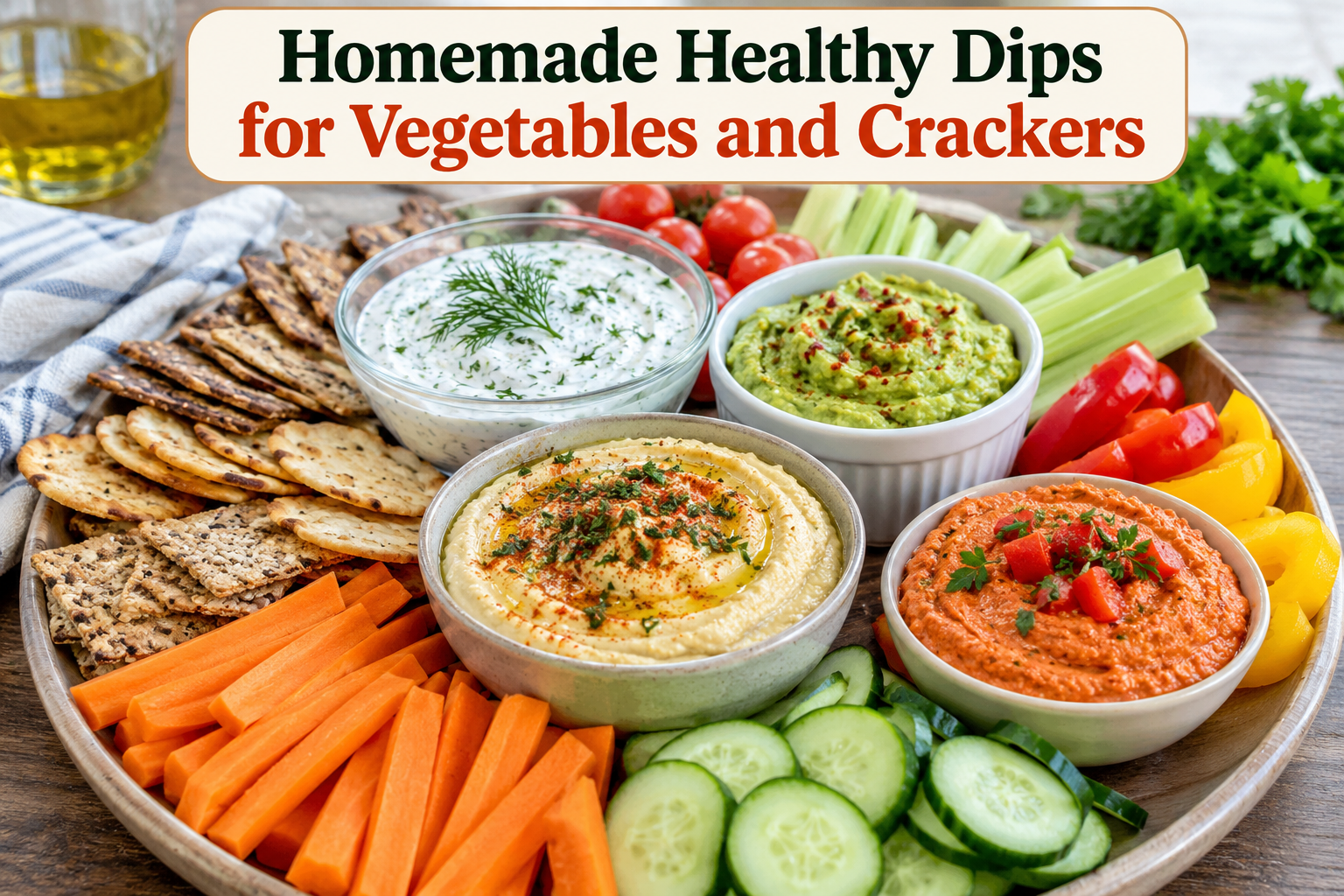
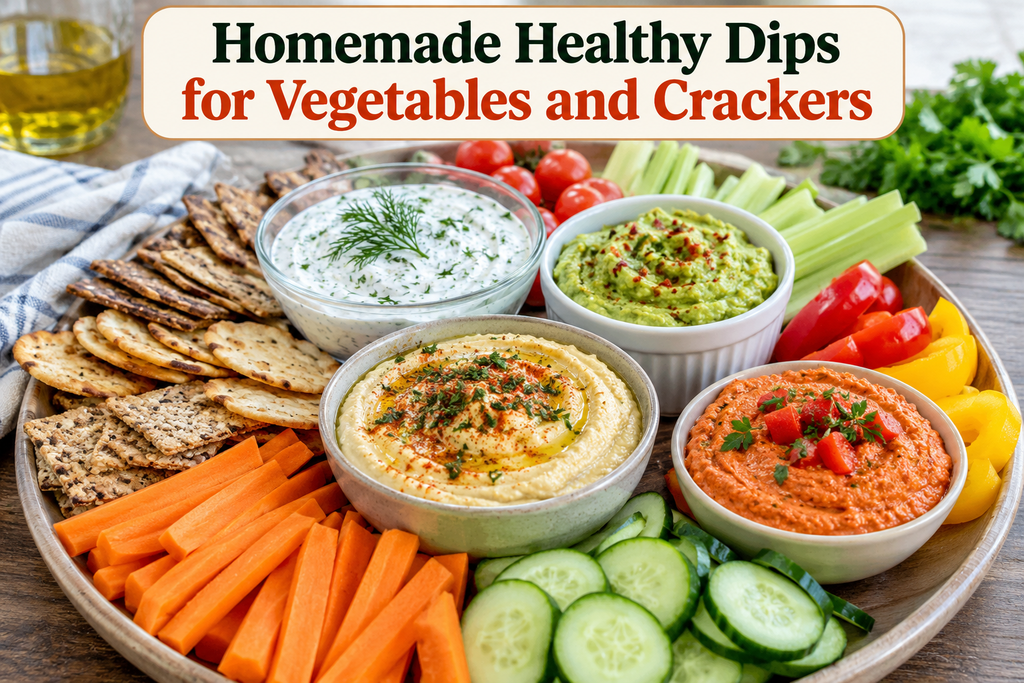
Healthy eating becomes much easier when simple foods actually taste enjoyable. Fresh vegetables and whole grain crackers are nutritious choices, but eating them plain every day can become boring. This is where homemade healthy dips can make a big difference. A flavorful dip can turn sliced carrots, cucumbers, peppers, celery, and crackers into a satisfying snack that feels more complete.
I have always found that homemade food gives us more control over what goes into our meals. When we prepare dips at home, we can choose fresh ingredients, control the amount of salt, avoid unnecessary additives, and adjust the flavor according to personal taste. Many healthy dips can also be prepared in only a few minutes.
The best homemade healthy dips for vegetables and crackers are usually based on simple ingredients such as yogurt, beans, chickpeas, avocado, herbs, vegetables, nuts, and seeds. These foods provide flavor while also adding useful nutrients such as protein, fiber, healthy fats, vitamins, and minerals.
Why Homemade Healthy Dips Are a Smart Choice
Store bought dips are convenient, but some varieties contain large amounts of sodium, added sugar, oils, and preservatives. Preparing a dip at home allows you to decide exactly what goes into the bowl.
Homemade dips can also help make vegetables more appealing. Many people know that they should eat more vegetables, but plain raw vegetables do not always feel exciting. Adding a creamy yogurt dip or a smooth chickpea dip can make the same vegetables far more enjoyable.
Dips are also useful when preparing snacks for a family. Instead of serving highly processed snack foods, you can arrange colorful vegetables, crackers, and one or two homemade dips on a plate. It feels generous and satisfying without requiring complicated cooking.
Creamy Greek Yogurt Herb Dip
Greek yogurt is one of my favorite bases for a healthy homemade dip because it has a naturally thick texture and contains protein. Its mild flavor also works well with many herbs and seasonings.
To prepare a simple yogurt herb dip, place plain Greek yogurt in a bowl. Add fresh parsley, chopped dill, a little garlic, lemon juice, and black pepper. Mix everything well and allow the dip to rest for several minutes so the flavors can combine.
You can adjust the herbs according to what you have available. Fresh mint, coriander, or chives can also work beautifully.
This dip tastes especially good with cucumber slices, carrots, celery, bell peppers, and whole grain crackers. The cool and creamy texture makes fresh vegetables feel much more satisfying.
Classic Homemade Hummus
Hummus is one of the most useful healthy dips to keep in the refrigerator. It is made mainly from chickpeas, which provide plant based protein and fiber.
A simple homemade hummus can be prepared by blending cooked chickpeas with tahini, lemon juice, garlic, a small amount of olive oil, and a little water. Blend everything until the texture becomes smooth and creamy.
If the hummus seems too thick, add water gradually until you reach the consistency you prefer. A little ground cumin can provide extra depth of flavor.
Hummus pairs well with almost every common dipping vegetable. Try it with carrots, cucumber, celery, radishes, broccoli, or sweet peppers. It is also excellent with whole grain crackers.
Making hummus at home gives you the freedom to create different versions. You can blend in roasted red peppers, fresh herbs, cooked beetroot, or roasted garlic for variety.
Fresh Avocado Dip
Avocado has a naturally creamy texture, so it makes an excellent dip without requiring heavy cream or large amounts of oil.
For a quick avocado dip, mash a ripe avocado in a bowl. Add fresh lime or lemon juice, finely chopped tomato, coriander, and a small amount of onion. Season with black pepper and a little salt if needed.
The result is fresh, creamy, and full of flavor. Avocado also provides healthy fats that can make a snack more satisfying.
This dip works particularly well with cucumber rounds, pepper strips, carrots, and crisp crackers. Since avocado can darken after being exposed to air, it is best to prepare this dip close to serving time. Lemon or lime juice can help slow the color change.
White Bean and Garlic Dip
Beans are not only useful for soups and main meals. They can also create wonderfully smooth homemade dips.
White beans have a mild flavor that combines well with garlic and herbs. To make a white bean dip, blend cooked white beans with lemon juice, garlic, a small amount of olive oil, black pepper, and fresh parsley.
Add a spoonful of water if you want a softer texture.
This dip contains fiber and plant based protein, making it a filling choice for afternoon snacks. Its gentle flavor also makes it suitable for people who find stronger dips overwhelming.
Serve it with crackers, carrots, celery, broccoli, or cherry tomatoes.
Cottage Cheese Vegetable Dip
Cottage cheese can be transformed into a surprisingly smooth dip when blended properly. It contains protein and has a mild taste that works with many seasonings.
Place cottage cheese in a blender with lemon juice, black pepper, garlic, and fresh herbs. Blend until completely smooth.
You can add chopped cucumber or finely grated carrot if you want extra texture. Paprika can also provide a warm flavor without making the dip too strong.
A cottage cheese dip can be a useful choice when you want a protein rich snack. Pair it with vegetables and whole grain crackers for a simple snack that feels more substantial.
Roasted Red Pepper Dip
Roasting vegetables naturally brings out their sweetness. Red peppers are especially useful because their flavor becomes rich and slightly sweet when roasted.
For a simple roasted pepper dip, blend roasted red peppers with cooked chickpeas or white beans. Add garlic, lemon juice, paprika, and a small amount of olive oil.
Blend until smooth.
This colorful dip looks attractive on a snack plate and works well with many vegetables. It is particularly delicious with celery, cucumber, carrots, cauliflower, and crackers.
You can prepare roasted peppers in advance and store them in the refrigerator, making the dip quicker to assemble later.
Healthy Spinach Yogurt Dip
Spinach can also be included in homemade dips. It adds color and nutrients while blending easily with creamy ingredients.
Cook fresh spinach briefly until it softens, then allow it to cool. Squeeze out excess water and chop it finely. Mix the spinach with plain Greek yogurt, garlic, lemon juice, black pepper, and herbs.
The result is a light but creamy dip that works well with both vegetables and crackers.
If you prefer a smoother consistency, blend all the ingredients together instead of mixing them by hand.
Tomato and Herb Salsa
Healthy dips do not always need to be creamy. Fresh salsa is a light option that provides plenty of flavor.
Dice ripe tomatoes and combine them with finely chopped onion, coriander, fresh lime juice, and a small amount of black pepper. You can add chopped cucumber or sweet peppers for additional crunch.
Fresh salsa is refreshing and works especially well during warmer months.
Serve it with whole grain crackers or use firm vegetable slices for dipping. Cucumber, celery, and peppers are particularly suitable.
Carrot and Yogurt Dip
Carrots have natural sweetness, making them an interesting base for homemade dips.
Cook or roast carrots until tender. Blend them with Greek yogurt, lemon juice, garlic, and a small amount of cumin. Continue blending until smooth.
The combination creates a colorful dip with a slightly sweet and savory flavor. It pairs nicely with crackers as well as raw vegetables.
This is also a practical way to use cooked carrots left over from another meal.
Pea and Mint Dip
Green peas can create a bright and refreshing dip. They have a naturally sweet flavor and contain fiber and plant based protein.
Cook peas until tender, then allow them to cool. Blend them with fresh mint, lemon juice, black pepper, and a small amount of yogurt or olive oil.
The finished dip has a fresh flavor that works beautifully with cucumber slices, carrots, radishes, and crackers.
Mint makes this dip especially refreshing, but parsley can also be used if you prefer a milder taste.
Choosing Healthy Vegetables for Dipping
One of the easiest ways to make snacks more nutritious is to keep prepared vegetables in the refrigerator.
Carrots are a classic choice because they are naturally crisp and slightly sweet. Cucumbers are refreshing and easy to slice. Celery provides plenty of crunch, while bell peppers add color and natural sweetness.
Broccoli and cauliflower can also be eaten raw or lightly cooked before dipping. Radishes provide a sharper flavor that works well with creamy dips.
Using several different vegetables makes a snack plate more interesting. Different colors also provide different nutrients, so variety is useful for both taste and nutrition.
Choosing Better Crackers
Crackers can also be part of a balanced snack, but it helps to look at the ingredients.
Whole grain crackers are usually a better everyday choice because they can provide more fiber than crackers made mainly from refined flour. Look for products with simple ingredient lists and moderate amounts of sodium.
Portion size also matters. Instead of eating crackers directly from the package, place a reasonable amount on a plate alongside vegetables and dip. This makes it easier to enjoy the snack mindfully.
You can also combine a smaller serving of crackers with a larger serving of vegetables.
How to Keep Homemade Dips Fresh
Most homemade healthy dips should be stored in a clean, covered container in the refrigerator.
Yogurt based dips are usually best when eaten while fresh. Bean and chickpea dips can often be prepared ahead of time, which makes them useful for meal preparation.
Always use clean utensils when serving dips. If a dip develops an unusual smell, appearance, or texture, it is better not to eat it.
Avocado based dips are best enjoyed quickly because avocado naturally changes color after being cut.
Preparing smaller portions can help reduce food waste and ensure that the dip tastes fresh.
Simple Ways to Add More Flavor
Healthy food does not need to taste plain. Herbs and spices can completely change a simple dip without requiring large amounts of salt or sugar.
Fresh herbs such as parsley, coriander, mint, dill, and basil provide bright flavor. Garlic, cumin, paprika, black pepper, and lemon juice can also make dips more interesting.
Roasted vegetables add natural sweetness, while lemon and lime juice provide freshness.
Experimenting with these ingredients can help you discover combinations that suit your own taste.
Final Thoughts
Homemade healthy dips for vegetables and crackers are one of the simplest ways to make everyday snacks more flavorful and nutritious. Instead of relying only on packaged dips, you can prepare fresh options using yogurt, chickpeas, beans, avocado, vegetables, herbs, and simple seasonings.
Greek yogurt herb dip, homemade hummus, avocado dip, white bean dip, spinach yogurt dip, roasted red pepper dip, fresh salsa, and pea mint dip all offer different flavors without requiring complicated preparation.
The key is to keep things simple. Choose fresh ingredients, prepare vegetables in advance, select good quality crackers, and experiment with herbs and spices.
A bowl of homemade dip may seem like a small addition to a meal, but it can make healthy foods much more enjoyable. When vegetables and crackers are served with a fresh and flavorful dip, a simple snack can become something you genuinely look forward to eating.