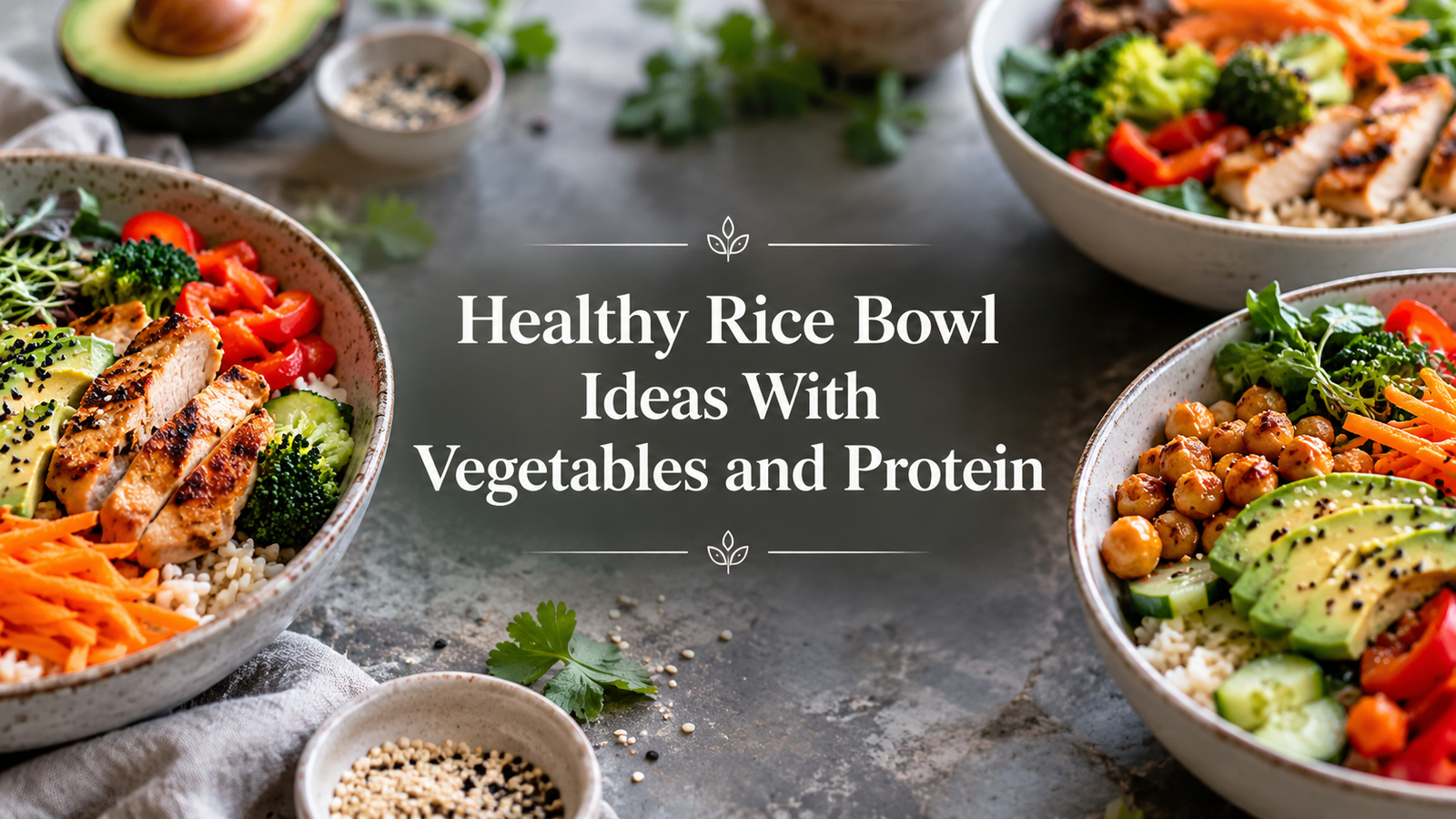
Healthy rice bowls are one of the easiest ways to create a balanced meal without spending hours in the kitchen. A simple bowl of rice can become a complete lunch or dinner when it is combined with colorful vegetables, a good source of protein, fresh herbs, and a flavorful sauce. I like rice bowls because they are flexible. You can use ingredients already available in your kitchen and adjust every bowl according to your taste.
When I started paying more attention to balanced meals, I realized that healthy eating does not need to be complicated. A meal does not have to contain unusual ingredients or require a long cooking process. In many cases, a combination of rice, vegetables, and protein can provide the energy and nutrients needed for a satisfying everyday meal.
The best part about healthy rice bowl ideas is that they can be prepared in many different ways. Chicken, eggs, beans, lentils, tofu, fish, and chickpeas can all provide protein. Vegetables can be served fresh, roasted, steamed, or lightly cooked. Different sauces and seasonings can completely change the flavor of the same basic ingredients.
Why Rice Bowls Make a Balanced Meal
A well prepared rice bowl can contain several important food groups in one dish. Rice provides carbohydrates that give the body energy. Vegetables add fiber, vitamins, minerals, color, and texture. Protein helps make the meal more satisfying and supports the body’s normal growth and maintenance.
Healthy fats can also be included through ingredients such as avocado, sesame seeds, nuts, or a small amount of olive oil.
The key is balance. Instead of filling the entire bowl with rice, I prefer using a moderate serving and leaving plenty of space for vegetables and protein. This creates a meal that feels filling while offering more variety.
Brown rice is often chosen because it contains more fiber than highly refined white rice. However, white rice can still be part of a balanced meal. The overall quality of the bowl matters more than focusing on one single ingredient.
Chicken and Vegetable Rice Bowl
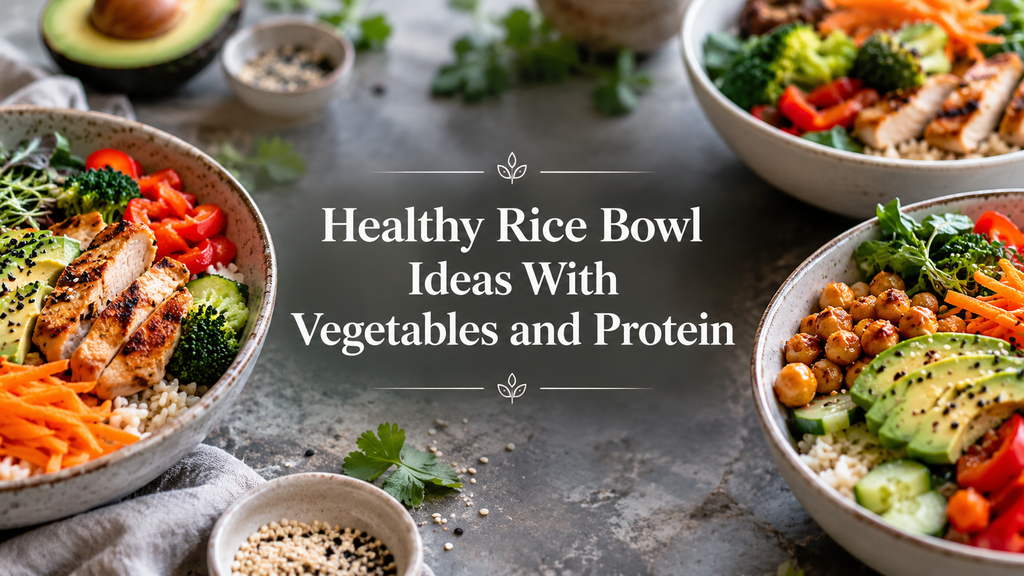
Chicken is one of the easiest proteins to use in a rice bowl. A simple grilled chicken and vegetable bowl works well for both lunch and dinner.
Start with cooked rice and add sliced grilled chicken. Include vegetables such as broccoli, carrots, bell peppers, cucumber, or spinach. You can cook some vegetables while keeping others fresh for a combination of soft and crunchy textures.
For flavor, a simple mixture of lemon juice, olive oil, garlic, and black pepper works beautifully.
I enjoy this type of bowl because it feels fresh without being too light. The chicken provides protein, while the vegetables make the meal colorful and more enjoyable.
You can prepare extra chicken and rice in advance and store them separately. This makes it easier to assemble a quick meal during a busy day.
Egg and Spinach Rice Bowl
Eggs are affordable, simple to cook, and easy to combine with vegetables.
Prepare a serving of rice and top it with a boiled, poached, or lightly fried egg. Add cooked spinach, sliced tomatoes, cucumber, and shredded carrots.
A small amount of soy sauce or a homemade yogurt dressing can add extra flavor.
The soft egg yolk can also act like a natural sauce when mixed with warm rice. If you prefer fully cooked eggs, sliced hard boiled eggs work just as well.
This bowl is especially useful when you want a quick meal but do not have cooked meat available.
Chickpea and Roasted Vegetable Rice Bowl
Chickpeas are one of my favorite plant based protein options because they are filling and easy to season.
For this bowl, roast vegetables such as zucchini, bell peppers, carrots, cauliflower, and onions until they become tender. Add them to cooked rice with seasoned chickpeas.
Chickpeas can be flavored with paprika, cumin, garlic, black pepper, and a small amount of olive oil.
Finish the bowl with fresh parsley and a spoonful of yogurt or tahini sauce.
The combination of roasted vegetables and chickpeas creates a rich flavor without requiring complicated cooking techniques. Chickpeas also provide plant based protein and fiber, making this bowl satisfying enough for a main meal.
Salmon and Broccoli Rice Bowl
Fish can make a simple rice bowl feel special while still keeping the meal nutritious.
Cook a piece of salmon using the oven, grill, or pan. Place it over rice and add steamed broccoli, carrots, cucumber, or cabbage.
A little lemon juice adds freshness. You can also use a simple sauce made from yogurt, herbs, and lemon.
Salmon naturally contains protein and useful fats. Combined with vegetables and rice, it creates a balanced meal that works particularly well for dinner.
If salmon is not available, other cooked fish varieties can also be used.
Lentil and Vegetable Rice Bowl
Rice and lentils are a classic combination in many parts of the world. They are inexpensive, filling, and easy to prepare.
Cook lentils until tender and season them with garlic, cumin, black pepper, and herbs. Serve them over rice with tomatoes, cucumber, spinach, carrots, or roasted vegetables.
A spoonful of plain yogurt can add creaminess and balance the spices.
This is one of the easiest healthy rice bowl ideas for anyone who wants to include more plant based meals in their diet. Lentils provide protein and fiber while vegetables add freshness and variety.
Tofu and Mixed Vegetable Rice Bowl
Tofu can absorb different flavors, which makes it useful for rice bowls.
Cut firm tofu into small cubes and cook it in a pan until the outside becomes lightly golden. Season it with garlic, ginger, a little soy sauce, and black pepper.
Serve the tofu with rice, broccoli, cabbage, carrots, bell peppers, and green onions.
Adding sesame seeds can provide extra texture.
Some people think tofu is bland, but good seasoning makes a big difference. Cooking it until the outside becomes slightly crisp also improves the texture.
Black Bean and Corn Rice Bowl
A black bean rice bowl is colorful, affordable, and easy to prepare.
Start with rice and add cooked black beans, corn, chopped tomatoes, lettuce, bell peppers, and avocado.
Fresh lime juice can brighten the entire bowl. You can also add cilantro, plain yogurt, or homemade salsa.
Beans provide plant based protein and fiber, while avocado adds healthy fats and a creamy texture.
This bowl works well when you want something fresh and satisfying without using meat.
Shrimp and Vegetable Rice Bowl
Shrimp cooks quickly, which makes it useful for busy evenings.
Cook shrimp in a pan with garlic, lemon juice, black pepper, and a small amount of olive oil. Add the shrimp to rice with vegetables such as broccoli, zucchini, bell peppers, spinach, or carrots.
Fresh herbs can be added before serving.
Because shrimp requires very little cooking time, the entire meal can come together quickly if the rice has already been prepared.
How to Build a Healthy Rice Bowl
Building your own healthy rice bowl is easier when you think of the meal in a few simple parts.
Start with rice as the base. Brown rice, white rice, basmati rice, jasmine rice, or wild rice blends can all work depending on your preference.
Next, choose a protein. Chicken, fish, eggs, beans, lentils, tofu, chickpeas, or shrimp are useful options.
Then add at least two or three vegetables. Using vegetables of different colors makes the bowl more attractive and provides a wider variety of nutrients.
Finally, add flavor with herbs, spices, lemon juice, yogurt dressing, tahini, or another simple homemade sauce.
Keeping the sauce moderate helps prevent the meal from becoming unnecessarily heavy.
Use Different Vegetables for Better Variety
One reason rice bowls remain interesting is that you can change the vegetables regularly.
Broccoli provides a firm texture and works well steamed or roasted. Carrots add natural sweetness and crunch. Bell peppers bring bright color. Spinach cooks quickly and can easily be added to warm rice. Cucumber adds freshness to bowls with spicy or strongly seasoned ingredients.
Other useful options include cabbage, peas, corn, mushrooms, cauliflower, tomatoes, zucchini, green beans, and leafy greens.
Seasonal vegetables are often a good choice because they may be fresher and more affordable.
Instead of following the exact same combination every time, I like choosing vegetables based on what is already available in the refrigerator.
Healthy Rice Bowl Meal Prep
Rice bowls are excellent for meal preparation.
You can cook a larger amount of rice at the beginning of the week and prepare one or two proteins in advance. Wash and chop vegetables so they are ready to use.
Keep sauces in separate containers until serving. This helps vegetables stay fresh and prevents the rice from becoming too wet.
Cooked ingredients should be cooled and refrigerated properly rather than being left at room temperature for long periods.
When it is time to eat, warm the rice and cooked protein thoroughly, then add fresh vegetables and sauce.
Preparing ingredients separately also allows you to create different bowls throughout the week without eating exactly the same meal every day.
Simple Ways to Add More Flavor
A healthy meal should still taste enjoyable. Herbs and spices can add a lot of flavor without making a rice bowl complicated.
Garlic, ginger, cumin, paprika, black pepper, chili flakes, parsley, cilantro, basil, and green onions can all transform a simple bowl.
Fresh lemon or lime juice is another easy way to brighten flavors.
Homemade sauces can also be prepared from simple ingredients. Plain yogurt mixed with herbs and lemon creates a fresh dressing. Tahini mixed with lemon juice and a little water makes a creamy plant based sauce.
The goal is to enhance the ingredients rather than covering everything with a heavy sauce.
Control Portions Without Making the Meal Too Small
A healthy rice bowl should leave you satisfied.
Instead of using an extremely small portion of food, focus on creating better proportions. Use enough rice to provide energy, include a generous amount of vegetables, and add a useful serving of protein.
Vegetables naturally increase the volume of the meal. Protein and fiber can help the meal remain satisfying for longer.
This is one reason rice bowls can work well for people trying to develop healthier everyday eating habits. They make portion balance easier to see because all the ingredients are presented together.
Turn Leftovers Into a New Meal
Rice bowls are also a practical way to reduce food waste.
Leftover roasted chicken can become the protein for tomorrow’s lunch. Extra vegetables from dinner can be added to rice. A small serving of beans, lentils, or cooked fish can easily become part of another meal.
Instead of viewing leftovers as incomplete meals, I like thinking of them as ingredients for a new bowl.
Adding fresh vegetables, herbs, or a different sauce can make leftovers taste completely different.
Final Thoughts
Healthy rice bowl ideas with vegetables and protein prove that nutritious meals do not have to be difficult or boring. With a simple base of rice, colorful vegetables, and a suitable protein source, you can create countless combinations for lunch or dinner.
Chicken and vegetables offer a familiar option, while chickpeas, lentils, beans, and tofu are useful for plant based meals. Eggs provide a simple solution when time is limited, and fish or shrimp can bring extra variety to your weekly menu.
The most useful approach is to keep the basic formula simple. Choose your rice, add protein, include several vegetables, and finish with herbs, spices, or a light sauce.
Once you become comfortable with this method, you may not need a strict recipe every time. You can simply look at the ingredients available in your kitchen and build a balanced meal around them.
That flexibility is what makes healthy rice bowls so practical. They can be affordable, colorful, filling, easy to prepare, and adaptable to different tastes. Whether you are planning family dinners, preparing meals for work, or trying to include more vegetables and protein in your daily routine, a well balanced rice bowl can be a simple and satisfying choice.