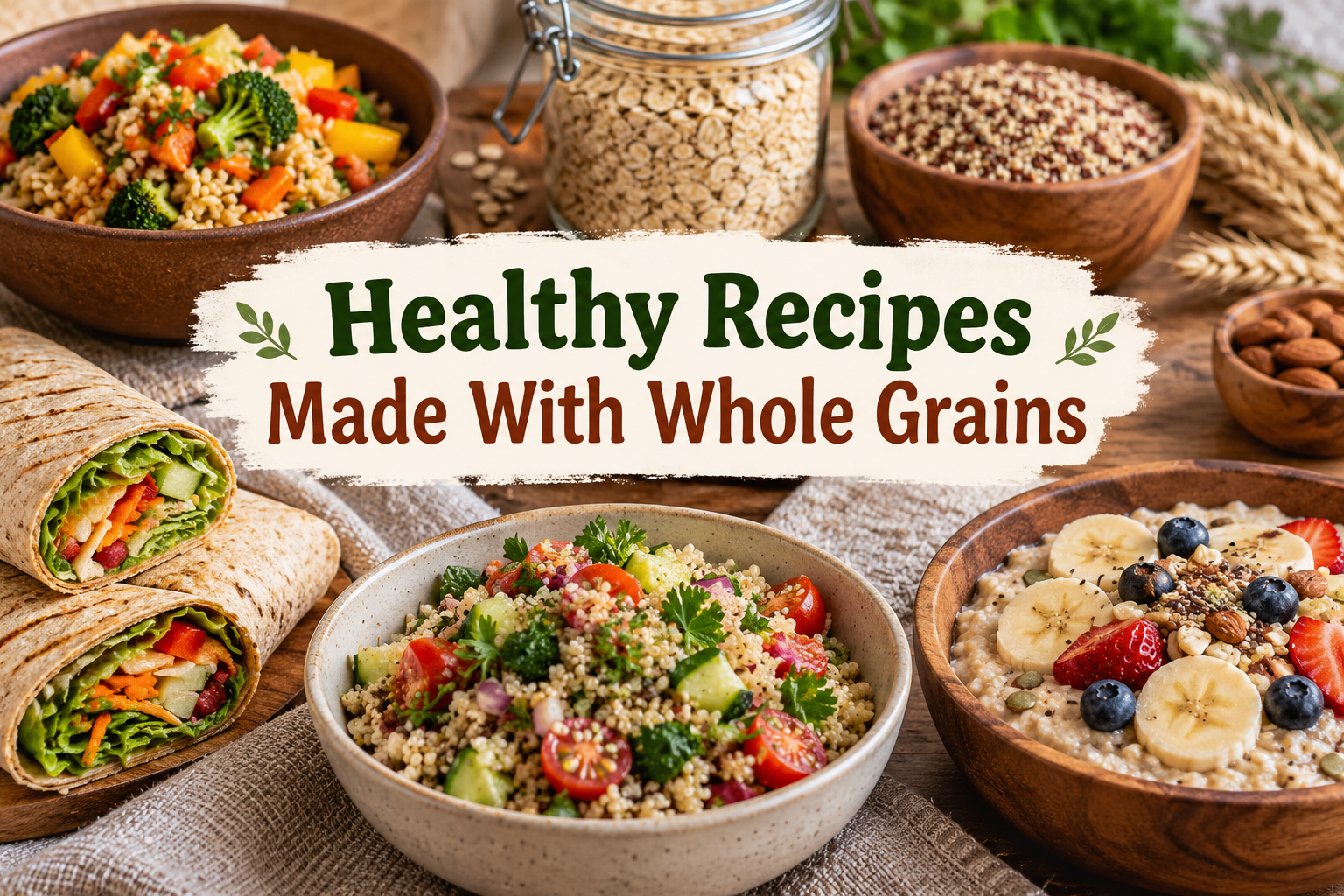
Healthy eating becomes much easier when simple and nutritious ingredients are part of everyday meals. One ingredient group that deserves a regular place in the kitchen is whole grains. They are filling, versatile, affordable, and easy to use in many different recipes. From breakfast bowls and warm soups to salads and dinner plates, whole grains can make meals more satisfying without making cooking complicated.
Healthy recipes made with whole grains are also a practical choice for people who want to improve the quality of their daily diet. Whole grains provide fiber, vitamins, minerals, and useful plant nutrients. Unlike highly refined grains, they contain more of the natural grain structure. This is one reason foods such as oats, brown rice, barley, quinoa, whole wheat, and millet can fit well into a balanced eating routine.
I like whole grain recipes because they do not require expensive ingredients or advanced cooking skills. Most of them can be prepared with common vegetables, herbs, beans, eggs, yogurt, fruit, and simple seasonings. Once you learn a few basic combinations, creating healthy meals becomes much easier.
Why Whole Grains Are a Good Choice
A whole grain contains the bran, germ, and inner part of the grain. These natural parts contain important nutrients that may be reduced when grains are heavily refined.
One of the biggest benefits of whole grains is their fiber content. Fiber helps meals feel more filling and supports normal digestion. A satisfying meal can also make it easier to avoid unnecessary snacking soon after eating.
Whole grains can provide nutrients such as magnesium, iron, phosphorus, and several B vitamins. The exact nutrition depends on the grain you choose, so eating different types of whole grains is a simple way to add variety to your diet.
Another advantage is their texture. Brown rice has a pleasant chewiness, oats become soft and creamy, quinoa stays light, and barley gives soups a rich and comforting texture. This variety keeps healthy eating interesting.
Creamy Oatmeal With Fresh Fruit
Oatmeal is one of the easiest healthy whole grain recipes for breakfast. It takes only a few ingredients and can be changed according to the fruit and toppings available at home.
Add rolled oats and milk or water to a saucepan. Cook gently until the oats become soft and creamy. Transfer them to a bowl and add sliced banana, berries, apple, or any seasonal fruit.
For extra flavor, sprinkle a little cinnamon on top. You can also add chopped walnuts, almonds, chia seeds, or pumpkin seeds.
I prefer using naturally sweet fruit instead of adding a large amount of sugar. A ripe banana or a few chopped dates can give oatmeal plenty of sweetness.
This breakfast provides whole grains, fruit, and healthy fats in one simple bowl.
Vegetable Brown Rice Bowl
Brown rice is an excellent base for a balanced lunch or dinner. Its mild flavor works well with almost any vegetable or protein.
Cook brown rice until tender. While the rice is cooking, prepare vegetables such as carrots, bell peppers, peas, spinach, broccoli, or zucchini.
Heat a small amount of olive oil in a pan and cook the vegetables until they are tender but still slightly firm. Add garlic, black pepper, herbs, and a small amount of salt.
Place the cooked brown rice in a bowl and arrange the vegetables on top. Add chickpeas, lentils, grilled chicken, tofu, or a boiled egg for extra protein.
A squeeze of fresh lemon juice gives the entire bowl a bright and refreshing flavor.
This is one of my favorite healthy recipes made with whole grains because it is easy to adjust according to whatever ingredients are already in the kitchen.
Quinoa and Chickpea Salad
Quinoa is easy to prepare and works especially well in fresh salads.
Cook the quinoa according to the package instructions and allow it to cool. Add it to a large bowl with cooked chickpeas, chopped cucumber, tomato, onion, parsley, and bell pepper.
For the dressing, mix lemon juice, olive oil, black pepper, and a small amount of salt. Pour the dressing over the salad and mix gently.
You can also add fresh mint, grated carrot, spinach, or a small amount of crumbled cheese.
This salad can be prepared in advance and stored in the refrigerator, making it useful for busy working days. It provides a pleasant combination of soft quinoa, crunchy vegetables, and filling chickpeas.
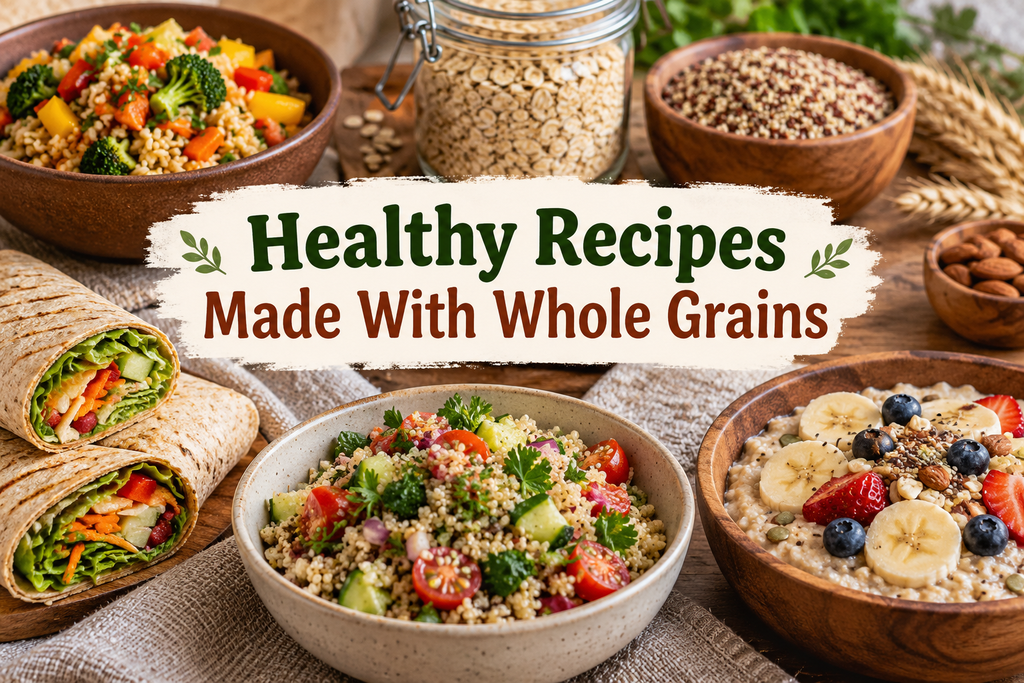
Whole Wheat Vegetable Wrap
A whole wheat wrap can turn a few basic ingredients into a quick and nutritious meal.
Take a whole wheat tortilla or flatbread and spread a thin layer of hummus or plain yogurt sauce over it. Add lettuce, cucumber, tomato, grated carrot, bell pepper, and cooked beans or chicken.
Roll everything together tightly and serve immediately.
For more flavor, add fresh coriander, parsley, black pepper, or a squeeze of lemon.
Whole wheat wraps are especially useful when you need a quick lunch. They can also be packed for work or prepared as an easy family meal.
When buying packaged wraps, I usually prefer options where whole wheat or another whole grain appears clearly in the ingredient list.
Barley Vegetable Soup
Barley is a wonderful grain for soups because it gives them a hearty texture.
Start by cooking chopped onion, garlic, carrot, and celery in a small amount of oil. Add tomatoes, barley, and vegetable or chicken broth.
Let everything simmer until the barley becomes tender. During the final part of cooking, add spinach, peas, green beans, or any other vegetables you enjoy.
Season the soup with black pepper, parsley, oregano, or other herbs.
A bowl of barley vegetable soup feels warm and comforting while still containing plenty of nutritious ingredients. It is especially useful during cooler weather.
You can cook a large pot and keep portions in the refrigerator for easy meals during the week.
Whole Grain Pasta With Vegetables
Pasta does not need to be covered in heavy sauces to taste good. Whole grain pasta can become a simple and satisfying meal when combined with fresh vegetables and herbs.
Cook the pasta until tender. In another pan, lightly cook garlic, tomato, spinach, mushrooms, zucchini, and bell pepper with a small amount of olive oil.
Add the cooked pasta to the vegetables and mix everything together.
Season with black pepper, basil, parsley, oregano, and a small amount of salt. A little grated cheese can be added for extra flavor if desired.
The vegetables add color and freshness, while the whole grain pasta provides a satisfying base.
This recipe is also a good way to use small amounts of leftover vegetables before they go to waste.
Savory Oats With Egg and Vegetables
Oats are usually associated with sweet breakfasts, but they also taste excellent in savory recipes.
Cook oats in water or low sodium broth until soft. In a separate pan, cook chopped spinach, tomato, onion, and bell pepper.
Mix the vegetables into the oats and season with black pepper, herbs, and a little salt. Add a boiled, poached, or lightly cooked egg on top.
The result is a warm and filling meal that can work for breakfast, lunch, or even a light dinner.
Savory oats are especially useful for anyone who wants to eat more whole grains but does not enjoy sweet breakfast foods every day.
Millet Breakfast Bowl
Millet is another whole grain that can be turned into a comforting breakfast.
Cook millet with water or milk until it becomes tender. Add cinnamon and a small amount of vanilla for flavor.
Serve it with sliced banana, apple, berries, raisins, or chopped dates. Nuts and seeds can be added for texture.
The finished bowl is simple, warm, and naturally satisfying.
Trying grains such as millet also helps create more variety instead of depending only on rice, bread, and oats.
Brown Rice and Lentil Dinner
Brown rice and lentils make a simple meal using inexpensive pantry ingredients.
Cook brown rice and lentils separately or prepare them together if the cooking times are suitable. In a pan, cook onion, garlic, tomato, and spices until fragrant.
Mix in the cooked lentils and serve them with brown rice.
Add a fresh cucumber and tomato salad on the side. Plain yogurt can also be served with the meal.
This type of recipe shows that healthy food does not need to be complicated. Basic grains, legumes, vegetables, and seasonings can create a satisfying homemade dinner.
Whole Wheat Vegetable Pancakes
Whole wheat flour can also be used for savory pancakes.
Mix whole wheat flour with water, an egg, grated carrot, chopped spinach, onion, coriander, and simple seasonings. Stir until you have a smooth batter.
Pour small portions into a lightly greased pan and cook both sides until golden.
Serve the pancakes with plain yogurt, a fresh tomato dip, or a vegetable salad.
These pancakes can be a useful way to include more vegetables and whole grains in a family meal, especially when you want something different from regular bread.
Tips for Cooking With Whole Grains
Healthy recipes made with whole grains become much easier once a few basic habits are developed.
Keep two or three whole grains in your pantry so you always have options available. Oats, brown rice, quinoa, barley, and whole wheat pasta are good places to start.
Cook larger portions when you have time. Cooked brown rice or quinoa can be stored in the refrigerator and used in salads, bowls, soups, and quick meals.
Use herbs, spices, garlic, lemon juice, and fresh vegetables to build flavor instead of depending on heavy sauces.
Try different grains instead of eating the same one every day. Variety makes meals more enjoyable and provides a wider range of nutrients.
When introducing whole grains into your diet, you can also make changes gradually. For example, replace some white rice with brown rice or choose whole wheat pasta instead of regular pasta for certain meals.
Making Whole Grain Meals More Balanced
Whole grains are nutritious, but a complete meal usually needs more than grains alone.
I find it helpful to think about combining a whole grain with vegetables and a source of protein. For example, brown rice can be paired with vegetables and beans. Quinoa can be served with chickpeas and salad. Whole wheat pasta can be combined with vegetables and chicken.
Healthy fats can also be included in moderate amounts through foods such as nuts, seeds, avocado, or olive oil.
This simple approach creates meals that offer different textures, flavors, and nutrients without requiring complicated recipes.
Final Thoughts
Healthy recipes made with whole grains can be simple, flavorful, and suitable for everyday life. Oats, brown rice, quinoa, barley, millet, and whole wheat foods can easily become the foundation of breakfasts, lunches, dinners, and snacks.
The best approach is not to make healthy eating feel restrictive. Instead, use familiar ingredients and gradually improve the quality of everyday meals. Add colorful vegetables, choose simple proteins, experiment with herbs and spices, and keep useful whole grains available in the kitchen.
A creamy bowl of oatmeal, a fresh quinoa salad, vegetable brown rice, barley soup, or whole grain pasta can all become part of a balanced eating routine.
Small food choices made regularly can be more practical than trying to completely change your diet overnight. Whole grains make those small improvements easier because they are versatile, satisfying, and simple to prepare.
Once you start experimenting with healthy whole grain recipes, you may find that nutritious home cooking is not only good for your daily routine but also enjoyable, comforting, and full of flavor.