Eating healthy does not have to mean following a complicated diet or measuring every bite of food. One of the easiest ways to improve everyday nutrition is to learn how to build a balanced plate for every meal. A balanced plate gives your body a useful combination of vegetables, fruits, protein, whole grains, healthy fats, and other important nutrients.
When meals are properly balanced, they can help you feel satisfied for longer, maintain steady energy, and make healthy eating easier to follow. Instead of focusing on strict food rules, I prefer to think about what I can add to a plate to make it more complete. This simple approach makes healthy eating feel practical rather than restrictive.
Learning how to build a balanced plate is especially useful because the same basic idea can work for breakfast, lunch, dinner, and even simple meals prepared on busy days.
What Is a Balanced Plate?
A balanced plate is a meal that contains different food groups in sensible portions. The goal is not to make every meal perfect. The goal is to provide the body with a variety of nutrients through everyday foods.
A simple balanced plate usually includes plenty of vegetables, a source of quality protein, a source of healthy carbohydrates, and a small amount of healthy fat. Fresh fruit or dairy foods can also be included depending on the meal.
The exact foods can change according to personal preference, culture, availability, and budget. For example, one person may choose brown rice and grilled chicken while another may prefer whole wheat roti with lentils and vegetables. Both meals can be balanced when portions and ingredients are chosen carefully.
This flexibility is what makes the balanced plate method useful for everyday eating.
Fill a Large Part of Your Plate With Vegetables
Vegetables should have an important place in a balanced meal. They provide vitamins, minerals, fiber, and natural plant compounds while adding color and texture to food.
Try to include different vegetables throughout the week instead of eating the same ones every day. Tomatoes, carrots, spinach, cucumbers, cabbage, cauliflower, peas, bell peppers, broccoli, pumpkin, and green beans are all useful choices.
You can eat vegetables raw, steamed, roasted, grilled, boiled, or lightly cooked with spices. The cooking method can change the flavor without making healthy meals boring.
For lunch or dinner, vegetables can take up a large section of the plate. If you are eating curry, rice, or roti, adding a generous serving of cooked vegetables or salad can make the meal feel more complete.
Color can also be a useful guide. A plate containing several natural colors often provides a wider variety of nutrients.
Include a Good Source of Protein
Protein is another essential part of a balanced plate. It helps support muscles and other body tissues and can also make meals more satisfying.
Good protein choices include eggs, chicken, fish, lentils, beans, chickpeas, yogurt, milk, cottage cheese, tofu, nuts, and seeds.
You do not need to eat meat at every meal to get protein. Lentils and beans can be excellent everyday options, especially when combined with vegetables and whole grains.
For example, a bowl of lentil curry with whole wheat roti and salad can provide a simple balanced meal. Grilled fish with vegetables and rice is another good option. At breakfast, eggs with whole grain toast and fruit can create a satisfying combination.
When choosing animal protein, it can be helpful to use cooking methods such as grilling, baking, steaming, or light pan cooking rather than relying regularly on deep frying.
Choose Quality Carbohydrates
Carbohydrates are sometimes treated as foods that should be avoided, but they are an important source of energy. The type and portion of carbohydrate matter more than simply removing them from your plate.
Whole grains and minimally processed carbohydrate foods usually provide more fiber and nutrients than highly refined choices.
Useful options include oats, brown rice, whole wheat bread, whole wheat roti, barley, potatoes, sweet potatoes, corn, and other whole grain foods.
A balanced plate does not need to be filled mainly with rice, bread, or pasta. Instead, carbohydrates can make up a moderate part of the meal while vegetables and protein take up the remaining space.
This approach allows you to enjoy familiar foods without making one food group dominate the entire plate.
Add Healthy Fats in Small Amounts
Fat is an important part of nutrition, but portion size matters because fats are concentrated sources of energy.
Healthy fat sources include nuts, seeds, olives, avocado, peanut butter, and certain vegetable oils. Fish can also provide beneficial fats.
You usually do not need a large amount of added oil to make food enjoyable. Herbs, spices, garlic, ginger, lemon juice, vinegar, onions, and fresh herbs can create plenty of flavor.
For example, a salad can be topped with a small amount of seeds or nuts. Yogurt can be served with fruit and a few almonds. Vegetables can be cooked with a reasonable amount of oil instead of being heavily fried.
These small choices can improve both nutrition and taste.
Do Not Forget Fruit
Fresh fruit can easily become part of a balanced eating routine. Fruits provide natural sweetness along with fiber, vitamins, minerals, and water.
Apples, bananas, oranges, berries, guava, melon, mango, grapes, pears, and other seasonal fruits can all be included.
Whole fruit is usually a practical choice because it contains fiber and requires chewing, which can make it more satisfying.
Fruit can be added to breakfast, eaten with yogurt, included after lunch, or enjoyed as a snack between meals. You do not necessarily need fruit with every single meal, but eating different fruits regularly can support a varied diet.
Seasonal fruit is often a convenient and affordable option.
Build a Balanced Breakfast
Breakfast can sometimes become heavily focused on refined carbohydrates and added sugar. A more balanced breakfast includes protein, fiber, and nutritious carbohydrates.
For example, oatmeal can be prepared with milk and topped with banana, nuts, and seeds. Eggs can be served with whole grain toast, tomatoes, cucumber, and fresh fruit. Plain yogurt can be combined with oats, fruit, and a few nuts.
The idea is to avoid depending only on foods such as sugary cereal, sweet biscuits, or refined bread.
Adding protein and fiber to breakfast can make the meal more filling and give it better nutritional variety.
Create a Balanced Lunch
Lunch is easier to balance when you think about the plate before serving the food.
Start with vegetables or salad. Add a protein source such as chicken, fish, lentils, beans, eggs, or yogurt. Then add a moderate serving of rice, roti, potatoes, or another carbohydrate food.
A simple lunch could include grilled chicken, brown rice, and mixed vegetables. Another option could be chickpea curry with whole wheat roti, cucumber salad, and plain yogurt.
Traditional meals can fit perfectly into a balanced diet. The goal is usually to improve proportions rather than replace every familiar food.
Make Dinner Balanced but Simple
Dinner does not need to be complicated to be nutritious. Simple meals are often easier to maintain as part of a healthy routine.
A vegetable soup with beans and whole grain bread can work well. Fish with roasted vegetables and potatoes is another example. Lentils served with vegetables, salad, and roti can also create a balanced dinner.
If dinner is prepared after a busy day, keeping basic ingredients available at home can make healthier choices easier.
Frozen vegetables, eggs, canned beans, lentils, yogurt, whole grain bread, and simple fresh produce can all help you prepare a balanced meal without spending hours in the kitchen.
Pay Attention to Portion Balance
Building a balanced plate is also about proportion.
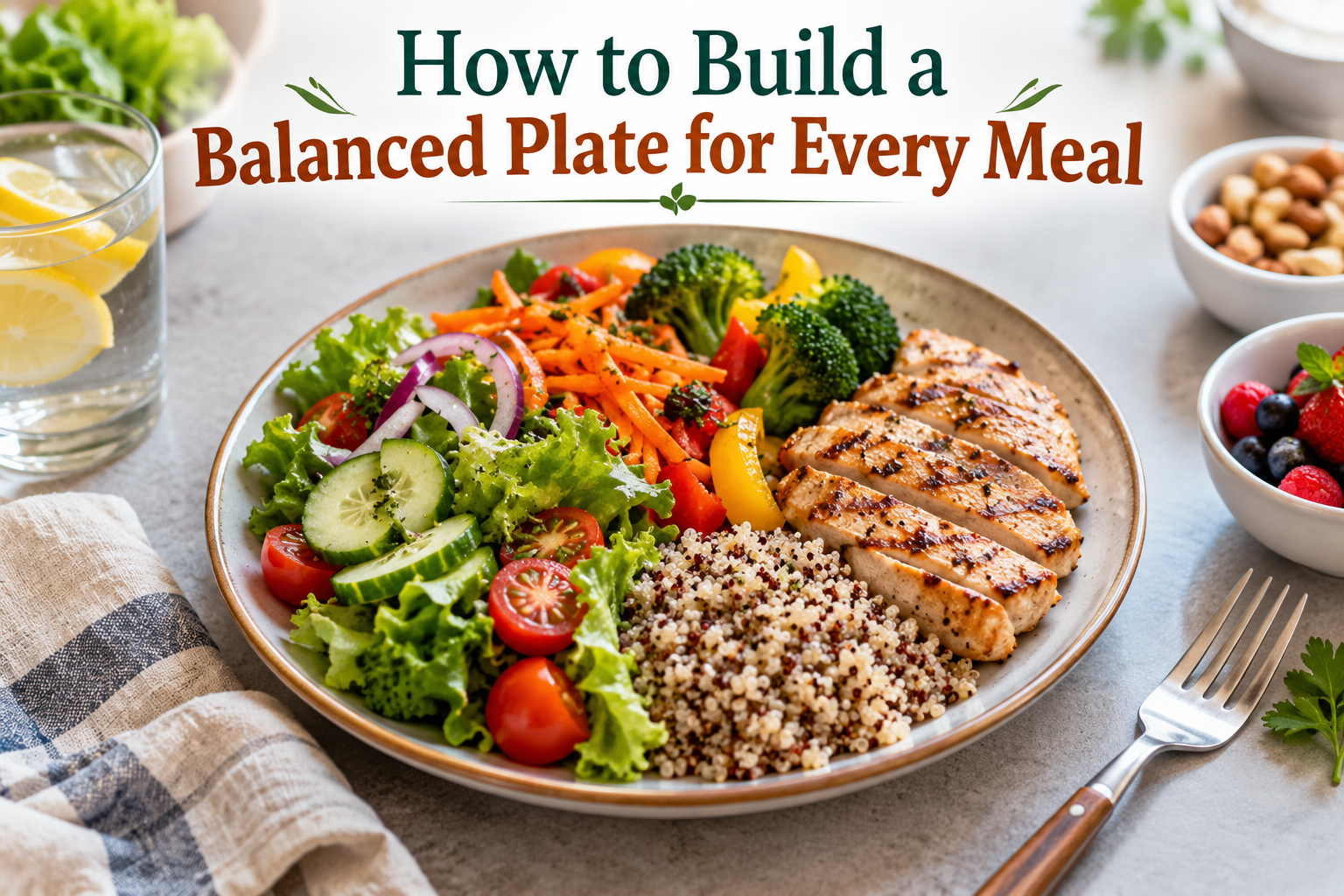
A useful visual method is to imagine your plate divided into sections. A large section can contain vegetables. Another section can contain protein. The remaining section can contain whole grains or another healthy carbohydrate source.
This does not have to be measured perfectly.
Some meals naturally look different. A bowl of vegetable and bean soup, for example, does not divide neatly into separate sections. A mixed rice dish may combine several ingredients together.
In these situations, simply ask whether the meal contains enough vegetables, protein, and quality carbohydrates. This flexible thinking is more realistic than trying to make every plate look identical.
Drink Water With Your Meals
Beverages can easily add large amounts of sugar to an otherwise balanced meal.
Water is one of the simplest drinks to choose with everyday meals. You can also use sparkling water or water flavored naturally with lemon, cucumber, mint, or fresh fruit.
Unsweetened tea and other low sugar drinks can also fit into a healthy eating pattern.
Sugary drinks do not have to be completely forbidden, but drinking them frequently can make it harder to maintain balanced nutrition. Making water the usual choice is a simple habit that supports healthier meals.
Use Simple Cooking Methods
The ingredients on your plate are important, but cooking methods also matter.
Grilling, baking, steaming, boiling, roasting, and light pan cooking can help you prepare flavorful meals without using excessive oil.
Spices are especially helpful when reducing heavy sauces or large amounts of fat. Black pepper, cumin, coriander, paprika, turmeric, garlic, ginger, chili, lemon, and fresh herbs can completely change the flavor of simple foods.
Healthy food should still taste enjoyable. When meals are satisfying, you are more likely to continue eating them regularly.
Plan Your Plate Before You Get Hungry
Balanced eating becomes easier when you prepare in advance.
You do not need a complicated meal planning system. Even basic preparation can help. Wash vegetables after shopping. Keep cooked beans or lentils ready. Boil a few eggs. Prepare rice in advance. Keep fruit where you can easily see it.
When healthy ingredients are convenient, it becomes easier to build a balanced plate quickly.
Shopping with a simple plan can also prevent the kitchen from becoming filled mainly with snack foods while useful meal ingredients are missing.
Variety Is More Important Than Perfection
No single food provides every nutrient your body needs. This is why variety is an important part of building balanced meals.
Change your vegetables, fruits, proteins, and grains throughout the week.
One day you might eat fish with rice and vegetables. Another day you could have lentils, roti, salad, and yogurt. Breakfast could alternate between eggs, oatmeal, yogurt, fruit, and whole grain foods.
Variety keeps meals interesting while providing a broader mixture of nutrients.
There is also no need to feel that one less balanced meal has ruined your healthy eating routine. Nutrition is built through regular habits over time, not through one perfect meal.
Make the Balanced Plate Method Fit Your Lifestyle
The best healthy eating method is one that you can realistically follow.
You can build balanced plates using expensive ingredients, but you certainly do not need to. Beans, lentils, seasonal vegetables, eggs, oats, rice, potatoes, yogurt, and local fruits can all be used to create affordable nutritious meals.
The same principle can also be adapted to traditional foods.
If you enjoy roti, include it in a balanced portion alongside vegetables and protein. If rice is a regular part of your meals, combine it with vegetables, lentils, beans, fish, chicken, or other nutritious foods.
Healthy eating becomes much easier when it works with your normal lifestyle instead of constantly fighting against it.
Final Thoughts
Learning how to build a balanced plate for every meal is one of the simplest ways to improve everyday eating habits. You do not need strict rules, complicated recipes, or expensive ingredients.
Focus on variety. Include plenty of vegetables, choose a useful source of protein, add a sensible portion of quality carbohydrates, use healthy fats in reasonable amounts, and enjoy fruits regularly. Water can remain your main everyday drink.
Most importantly, aim for consistency rather than perfection.
A balanced plate is not about making every meal look exactly the same. It is about giving your body a good mixture of foods throughout the day. Once this approach becomes familiar, choosing healthier meals can start to feel natural.
Small improvements repeated every day are often easier to maintain than dramatic changes. By learning to balance your plate, you can make nutritious eating simpler, more enjoyable, and easier to continue as part of everyday life.