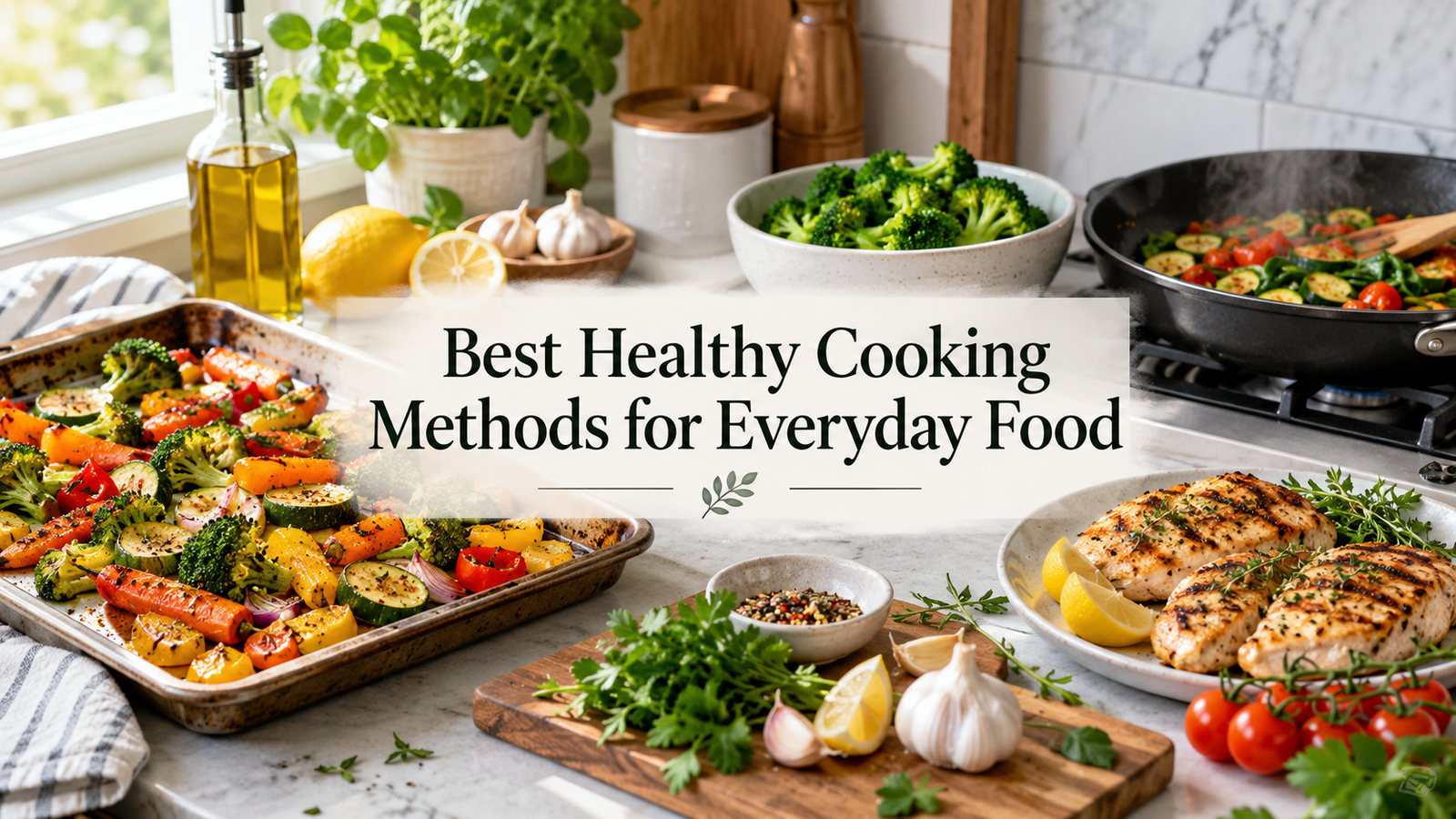
Healthy eating does not always mean buying expensive ingredients or preparing complicated meals. In my experience, one of the most practical ways to improve everyday food is to pay attention to how it is cooked. The same vegetables, chicken, fish, eggs, grains, or lentils can become either a balanced meal or a very heavy one depending on the cooking method.
When I started learning more about nutrition and home cooking, I realized that healthy cooking methods are not about removing flavor. They are about using heat, moisture, seasoning, and ingredients in a smarter way. Simple methods such as steaming, baking, grilling, boiling, roasting, and sautéing can help prepare delicious meals while keeping unnecessary oil, sugar, and heavy sauces under control.
The best healthy cooking methods for everyday food are also the ones that are easy enough to use regularly. A method may sound healthy, but if it takes too much time or requires special equipment, most people will not use it every day. That is why I prefer practical techniques that work with normal kitchen ingredients and common meals.
Why Cooking Method Matters
The way food is cooked can change its texture, taste, calorie content, and nutritional quality. For example, potatoes can be boiled, baked, roasted, or deep fried. They are still potatoes, but the final meal can be very different depending on how much oil is added and how they are prepared.
Healthy cooking usually focuses on using moderate heat, controlling added fats, keeping portions balanced, and avoiding unnecessary processing. It also encourages the natural flavors of vegetables, herbs, spices, whole grains, lean proteins, and other simple ingredients.
This does not mean that fat should be completely removed from cooking. Healthy fats can be part of a balanced diet. The goal is simply to avoid using more oil or butter than a recipe actually needs.
Steaming
Steaming is one of the simplest healthy cooking methods for vegetables, fish, chicken, and some grain based foods. Food is cooked using steam from hot water instead of being completely covered in water or fried in oil.
I like steaming because it keeps food moist without requiring much added fat. Vegetables such as broccoli, carrots, green beans, cauliflower, spinach, and peas can be steamed quickly.
The biggest mistake with steaming is overcooking. Vegetables should normally remain slightly firm and colorful instead of becoming very soft. Once they are cooked, flavor can be added with lemon juice, black pepper, herbs, garlic, or a small amount of olive oil.
Steamed fish can also be delicious when prepared with ginger, garlic, herbs, lemon, or mild spices.
Boiling
Boiling is another basic cooking technique that works well for many everyday foods. Eggs, potatoes, rice, pasta, lentils, beans, and vegetables can all be boiled.
One advantage of boiling is that it usually requires little or no added oil. This makes it useful when you want to keep a meal simple.
However, vegetables should not always be boiled for a long time because some nutrients can move into the cooking water. When I boil vegetables, I prefer using only the amount of water needed and cooking them until tender rather than extremely soft.
The leftover cooking liquid from vegetables or beans can sometimes be used in soups, sauces, or stews instead of being thrown away.
Baking
Baking is one of my favorite healthy cooking methods because it requires very little attention once the food goes into the oven. It can be used for chicken, fish, vegetables, potatoes, homemade snacks, and many other meals.
Instead of frying chicken in a large amount of oil, it can be seasoned with herbs and spices and baked until fully cooked. Vegetables can also be baked with a light coating of oil.
Baking allows ingredients to cook slowly and develop flavor without needing constant stirring.
For better results, I like using seasonings such as paprika, garlic, black pepper, oregano, thyme, cumin, lemon juice, and fresh herbs. These ingredients help create strong flavor without depending on heavy sauces.
Roasting
Roasting is similar to baking, but it is especially useful when you want vegetables or proteins to develop a richer flavor and slightly browned surface.
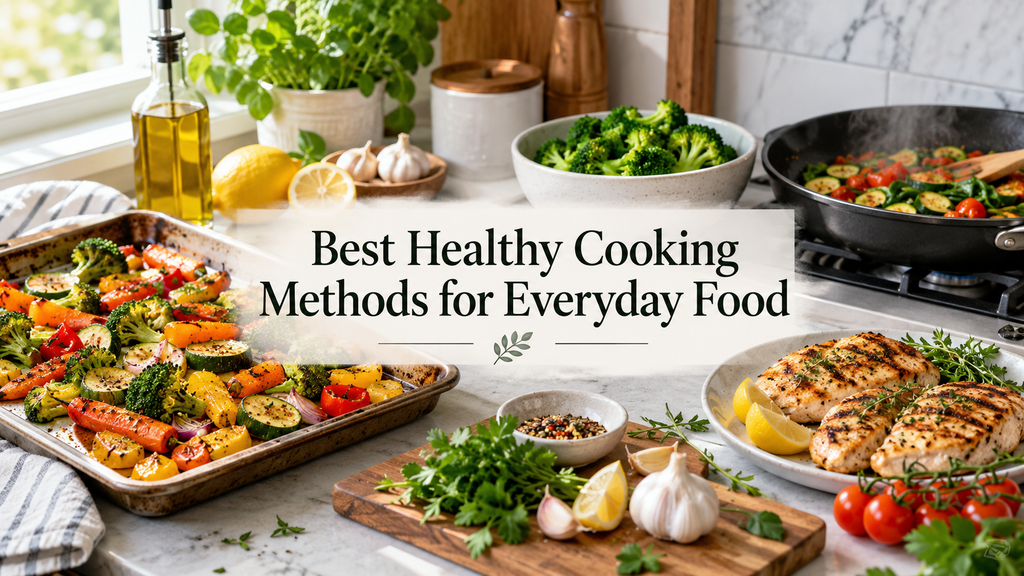
Carrots, onions, bell peppers, cauliflower, sweet potatoes, zucchini, pumpkin, and tomatoes are all excellent for roasting.
A small amount of oil can help vegetables brown properly. However, they do not need to be soaked in oil. I usually prefer tossing vegetables lightly so that the oil is spread evenly.
Roasting brings out natural sweetness in many vegetables, which can make them more enjoyable for people who normally find boiled vegetables boring.
Roasted vegetables can be served with rice, chicken, fish, lentils, pasta, or whole grains.
Grilling
Grilling is a popular healthy cooking method for chicken, fish, vegetables, and some fruits. It gives food a strong flavor without requiring large amounts of oil.
Chicken breast, fish fillets, mushrooms, peppers, onions, zucchini, corn, and tomatoes can all be grilled.
Marinating food before grilling can make a big difference. A simple marinade made from lemon juice, yogurt, garlic, herbs, black pepper, and spices can add flavor while keeping the meal light.
It is important not to burn food heavily. Cooking over controlled heat and turning the food when needed helps create good texture without excessive charring.
Grilled foods work especially well in salads, wraps, rice bowls, and simple family meals.
Sautéing With Less Oil
Sautéing is one of the most useful cooking techniques for everyday meals. It is quick, simple, and suitable for vegetables, eggs, chicken, seafood, tofu, and many other ingredients.
The key to healthier sautéing is controlling the amount of oil.
Many people pour oil directly from the bottle without measuring it. This can easily add more than the food actually needs. Using a spoon makes it much easier to control the amount.
A good nonstick or well seasoned pan can also reduce the need for excess oil.
If vegetables begin to stick during cooking, a small splash of water or broth can sometimes be added instead of adding more oil.
Garlic, onion, ginger, herbs, and spices can create plenty of flavor in a sautéed dish without relying on rich sauces.
Stir Frying
Stir frying is similar to sautéing but usually uses slightly higher heat and faster cooking.
This method works well when preparing meals with vegetables and lean protein. Chicken, shrimp, tofu, peppers, cabbage, carrots, mushrooms, green beans, and broccoli are common choices.
The vegetables should normally remain slightly crisp. This gives the meal a pleasant texture and prevents them from becoming overcooked.
A homemade stir fry sauce can be kept simple. Garlic, ginger, a little soy sauce, vinegar, lemon or lime juice, and spices are often enough.
When combined with brown rice, whole grain noodles, or another balanced carbohydrate source, stir fried vegetables and protein can create an easy complete meal.
Poaching
Poaching is a gentle cooking method in which food is cooked in hot liquid without aggressive boiling.
Eggs, chicken, fish, and some fruits can be poached.
Because the food is cooked mainly in water, broth, or another liquid, very little added fat is needed.
Poached chicken can be shredded and used in sandwiches, salads, soups, wraps, or rice dishes. Poached eggs can be served with whole grain toast and vegetables for a simple breakfast.
This method is especially useful when you want soft, tender food without frying.
Slow Cooking
Slow cooking is excellent for people who like preparing meals in larger quantities.
Soups, beans, lentils, chicken, vegetables, stews, and lean meat dishes can be cooked slowly until tender.
One benefit of slow cooking is that flavors have plenty of time to develop. This means meals can taste rich without requiring large amounts of butter or oil.
Herbs, garlic, onion, tomatoes, spices, broth, and vegetables can create a flavorful base.
Slow cooked meals are also useful for meal preparation because several servings can be prepared at once and stored for later.
Pressure Cooking
Pressure cooking is another practical method for busy households. It can reduce cooking time for foods that normally take much longer.
Beans, lentils, chickpeas, whole grains, soups, chicken, vegetables, and meat can all be prepared in a pressure cooker.
I find pressure cooking especially helpful for dried beans and lentils because it makes homemade meals easier to prepare without depending on heavily processed convenience foods.
The amount of oil needed is usually small because the food cooks mainly with steam and liquid.
Air Frying
Air fryers have become popular because they can create a crispy texture using less oil than traditional deep frying.
Potatoes, vegetables, chicken pieces, fish, and some homemade snacks can be prepared in an air fryer.
The main advantage is that food usually needs only a light coating of oil instead of being completely submerged in it.
However, air frying does not automatically make every food healthy. The ingredients still matter. Fresh potatoes with simple seasoning are very different from heavily processed frozen snacks.
For healthier everyday meals, I prefer using an air fryer for simple whole ingredients rather than highly processed foods.
Making Deep Fried Foods an Occasional Choice
Deep frying creates a crispy texture, but it also allows food to absorb a significant amount of added fat.
There is nothing wrong with enjoying fried food occasionally, but it does not need to be the main cooking method used every day.
Baking, air frying, roasting, and grilling can often produce satisfying results with much less oil.
For example, potato wedges can be roasted instead of deep fried. Chicken can be baked with a seasoned coating. Vegetables can be air fried or roasted until slightly crisp.
These small changes can make everyday meals lighter without completely changing the foods you enjoy.
Use Herbs and Spices for Better Flavor
Healthy cooking becomes much easier when you learn how to build flavor with herbs and spices.
Garlic, ginger, cumin, turmeric, paprika, coriander, black pepper, chili, oregano, basil, thyme, rosemary, mint, and parsley can completely change a simple meal.
Lemon juice and vinegar can also brighten flavors.
When food tastes good naturally, there is less need for excessive salt, sugar, butter, cream, or rich sauces.
I often think of seasoning as one of the most important parts of healthy home cooking because people are more likely to continue eating balanced meals when the food is genuinely enjoyable.
Keep Oil Portions Reasonable
Oil contains a lot of energy even when it comes from a nutritious source. For this reason, portion control is useful.
Instead of pouring oil directly into the pan, measure it with a spoon. Another option is to brush a small amount of oil over food before roasting or grilling.
Olive oil, avocado oil, and other cooking oils can fit into a balanced diet when used appropriately.
The goal is not to fear oil. It is simply to use enough for cooking and flavor without allowing it to dominate the meal.
Combine Cooking Methods
You do not have to choose only one healthy cooking technique.
Some of the best meals use several methods together.
You might steam broccoli, grill chicken, and serve both with boiled rice. You could roast vegetables and combine them with pressure cooked chickpeas. You could sauté onions and garlic before adding them to a slow cooked soup.
Learning several healthy cooking methods gives you more variety and prevents everyday meals from becoming repetitive.
Choose the Method That Fits the Ingredient
Different foods respond better to different cooking techniques.
Leafy vegetables often work well with steaming or quick sautéing. Root vegetables such as carrots and sweet potatoes are delicious when roasted. Fish can be baked, grilled, steamed, or poached. Chicken can be baked, grilled, pressure cooked, or sautéed.
Instead of forcing every ingredient into the same cooking method, think about which technique gives it the best texture and flavor with the least unnecessary fat.
This approach makes healthy cooking feel natural rather than restrictive.
Final Thoughts
The best healthy cooking methods for everyday food are simple methods that make nutritious ingredients enjoyable and easy to prepare. Steaming, boiling, baking, roasting, grilling, sautéing, stir frying, poaching, slow cooking, pressure cooking, and air frying can all support balanced home meals.
The most important lesson I have learned is that healthy cooking is not about making food plain. It is about using better techniques, reasonable amounts of oil, fresh ingredients, herbs, spices, and natural flavors.
Small changes can make a noticeable difference. Baking instead of deep frying, measuring oil instead of pouring it freely, roasting vegetables for extra flavor, or using herbs instead of heavy sauces are all realistic habits.
You do not need to change every meal at once. Start with one or two cooking methods that fit your daily routine. As they become familiar, add more techniques.
Over time, healthy cooking becomes less about following strict rules and more about knowing how to prepare everyday food in a way that is flavorful, balanced, practical, and enjoyable.