Sugar is a common ingredient in many homemade foods. It is used in cakes, cookies, drinks, breakfast dishes, sauces, desserts, and even some savory recipes. A small amount of sugar can improve flavor and texture, but it is easy to use more than we actually need. When I started paying closer attention to everyday recipes, I noticed that many dishes could still taste delicious with less sugar.
Reducing sugar in homemade recipes does not mean that food has to become boring or tasteless. In fact, using less sugar can help us notice the natural flavor of fruits, grains, nuts, spices, and other ingredients. The key is to make small changes instead of removing sweetness completely.
If you want to prepare healthier meals at home, there are many simple ways to reduce sugar without making cooking complicated. These practical ideas can be used in breakfast recipes, baked foods, snacks, drinks, sauces, and desserts.
Start by Using Less Sugar Than the Recipe Suggests
One of the easiest ways to reduce sugar in homemade recipes is simply to use a little less than the original amount.
Many recipes, especially desserts and baked foods, contain more sugar than necessary for an enjoyable taste. If a recipe asks for one cup of sugar, you can experiment by using three quarters of a cup. In some recipes, even a larger reduction may work well.
It is better to reduce the amount gradually. This allows your taste buds to adjust while helping you understand how sugar affects the recipe.
After eating foods with less added sugar for some time, very sweet foods may begin to taste much sweeter than before.
Use Naturally Sweet Fruits
Fresh and dried fruits can add natural sweetness to many homemade recipes.
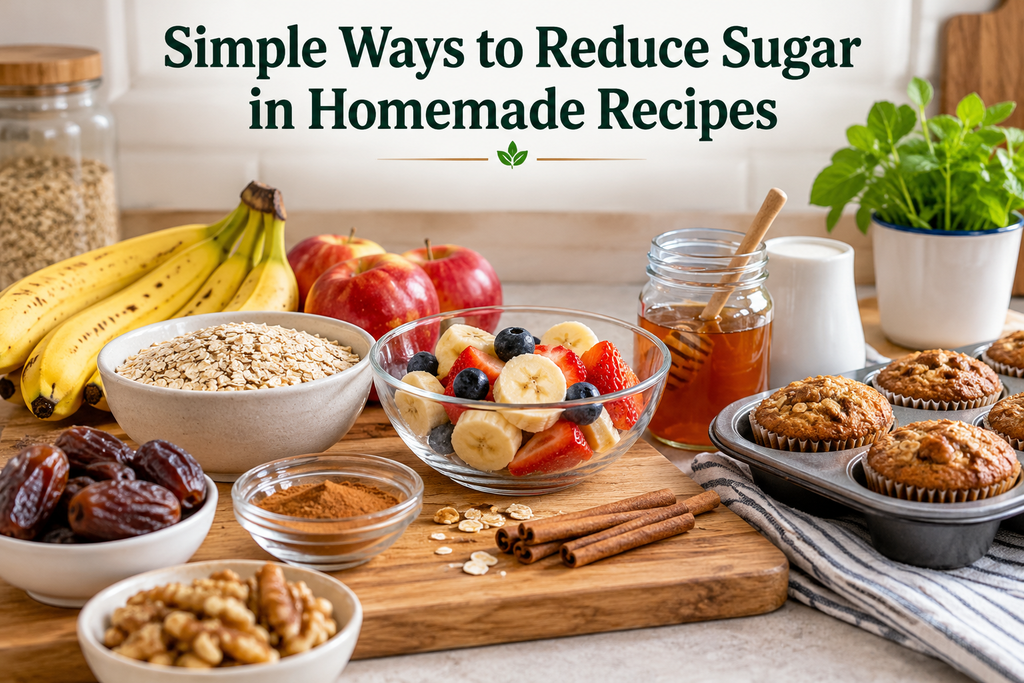
Bananas are especially useful because ripe bananas become naturally sweet and soft. Mashed banana can be added to oatmeal, pancakes, muffins, smoothies, and homemade snack bars.
Apples are another useful choice. Finely chopped apples or homemade apple puree can provide sweetness and moisture in baked recipes.
Dates can also be blended into a paste and used in certain desserts, energy bites, smoothies, and homemade bars.
Other naturally sweet options include mangoes, pears, peaches, berries, raisins, and figs.
Fruit still contains natural sugar, so portion size remains important. However, whole fruits also provide useful nutrients and fiber that are not normally found in ordinary table sugar.
Let Ripe Ingredients Provide More Flavor
The ripeness of fruit can make a big difference in homemade recipes.
A slightly green banana may taste mild, while a banana with brown spots can taste much sweeter. Ripe mangoes, peaches, pears, and other fruits also develop stronger natural sweetness.
Whenever I prepare a fruit based recipe, I prefer tasting the fruit before deciding how much extra sweetener is needed. Sometimes the fruit is already sweet enough.
This simple habit can prevent unnecessary sugar from being added to smoothies, fruit salads, yogurt bowls, and baked dishes.
Add Cinnamon for Natural Sweetness
Cinnamon does not contain sugar, but its warm flavor can make foods seem sweeter.
It works especially well in oatmeal, pancakes, coffee, yogurt, baked apples, muffins, smoothies, and breakfast bowls.
Instead of adding another spoonful of sugar to oatmeal, try adding cinnamon with sliced banana or apple.
Cinnamon can also be combined with other spices such as nutmeg, cardamom, ginger, or cloves to create a richer flavor.
Using aromatic spices is one of the easiest ways to make low sugar recipes more enjoyable.
Use Vanilla to Improve Flavor
Vanilla is another ingredient that can make a recipe taste naturally sweeter without requiring large amounts of sugar.
A small amount of vanilla extract can improve the flavor of oatmeal, yogurt, smoothies, pancakes, cakes, muffins, and homemade desserts.
Vanilla works because sweetness is not only about sugar. Aroma also affects the way we experience food.
When a recipe has a pleasant smell and rich flavor, we may feel less need to make it extremely sweet.
Reduce Sugar in Tea and Coffee Gradually
Hot drinks can quietly become a major source of added sugar when several teaspoons are used every day.
If you normally add two teaspoons of sugar to tea or coffee, try using one and a half teaspoons for a while. Later, reduce it to one teaspoon.
Gradual changes are usually easier than suddenly removing sugar completely.
You can also experiment with cinnamon, vanilla, or a small amount of milk to create a smoother taste.
Over time, many people become comfortable drinking tea or coffee with much less sugar than they used before.
Make Homemade Smoothies Without Added Sugar
Fruit smoothies usually do not need table sugar.
A ripe banana, mango, dates, berries, or other fruits can provide enough sweetness naturally.
You can combine fruit with plain yogurt, milk, oats, nuts, seeds, or ice depending on the recipe.
Before adding honey, sugar, syrup, or another sweetener, taste the smoothie first.
You may discover that no additional sweetener is necessary.
This is a useful habit because drinks can become very sweet without us realizing how much sugar has been added.
Choose Plain Yogurt
Flavored yogurt can sometimes contain a noticeable amount of added sugar. Preparing your own yogurt bowl gives you more control.
Start with plain yogurt and add fresh fruit such as bananas, berries, mangoes, or apples.
You can also add cinnamon, nuts, seeds, oats, or a small amount of dried fruit.
This creates a satisfying snack or breakfast while allowing you to decide exactly how sweet you want it.
Homemade yogurt combinations can also provide more variety because the ingredients can be changed every day.
Reduce Sugar in Homemade Baked Foods
Cakes, muffins, cookies, and other baked foods are common places where sugar can be reduced.
However, baking requires some care because sugar does more than provide sweetness. It can also affect texture, moisture, color, and structure.
For this reason, it is usually better to make gradual changes.
Try reducing the sugar slightly while adding ingredients that provide natural sweetness and moisture. Mashed banana, apple puree, dates, raisins, or other fruits can work well in suitable recipes.
You can also improve flavor with cinnamon, cocoa, vanilla, nuts, or coconut.
The goal should not always be to create a completely sugar free dessert. A moderate amount of sweetness can still fit into balanced eating.
Use Dark Chocolate in Small Amounts
Chocolate desserts do not always need large amounts of sugar.
Using cocoa powder or a small amount of darker chocolate can create a stronger chocolate flavor. Because the flavor is richer, you may feel satisfied with a smaller portion.
Dark chocolate can be chopped into oatmeal, yogurt, homemade muffins, or energy bites.
Pairing chocolate with bananas, berries, nuts, or dates can also create sweetness without relying entirely on added sugar.
Watch Sugar in Homemade Sauces
Sugar is not only found in desserts.
Homemade sauces, salad dressings, marinades, tomato sauces, and dips can also contain added sugar.
Whenever you prepare a sauce, taste it before adding sugar. Tomatoes, onions, carrots, fruits, or other ingredients may already provide natural sweetness.
You can improve flavor using herbs, garlic, lemon juice, vinegar, black pepper, paprika, or other spices.
A balanced combination of salty, sour, spicy, and naturally sweet flavors can reduce the need for added sugar.
Replace Sugary Breakfast Toppings
Breakfast foods can quickly become high in sugar because of toppings.
Pancakes, waffles, oatmeal, cereal, and yogurt are sometimes covered with sweet syrups or sugar.
Try using fresh fruit instead.
Banana slices, berries, peaches, apples, or mango can add both sweetness and texture.
Nut butter can also provide a rich flavor that makes breakfast more satisfying.
When the meal contains several interesting flavors and textures, large amounts of sweet topping become less necessary.
Prepare Homemade Snacks
Making snacks at home allows you to control how much sugar is used.
Simple homemade options include roasted nuts, popcorn, yogurt with fruit, oatmeal bites, fresh fruit, whole grain toast, and homemade trail mixes.
If you prepare energy bites, for example, dates or raisins can often provide enough sweetness without adding extra table sugar.
Homemade snacks can also be adjusted according to your personal taste, which makes it easier to reduce sweetness gradually.
Read Ingredient Labels When Cooking
Even homemade recipes may contain packaged ingredients such as sauces, cereals, flavored yogurt, bread, nut butter, or canned foods.
Some of these products may already contain added sugar.
Checking the ingredient label can help you understand what you are adding to your recipe.
You do not need to avoid every food that contains sugar. The goal is simply to make informed choices.
When possible, choose plain or unsweetened versions of ingredients and add sweetness yourself if needed.
Train Your Taste Buds Slowly
One of the most useful lessons I have learned is that our taste preferences can change.
If we regularly eat extremely sweet foods, lightly sweet foods may seem bland at first. When sugar is reduced gradually, natural flavors can become easier to notice.
Fresh fruit may begin to taste sweeter. Plain yogurt with berries can become more enjoyable. Oatmeal with banana and cinnamon may feel satisfying without several teaspoons of sugar.
This adjustment does not happen overnight, so patience is important.
Small changes repeated regularly are usually more practical than strict rules.
Focus on Flavor Instead of Sweetness
A good recipe does not depend on sweetness alone.
Texture, aroma, freshness, acidity, spices, herbs, and richness all contribute to the eating experience.
For example, chopped nuts can add crunch to oatmeal. Lemon juice can brighten a fruit dish. Cinnamon can improve baked apples. Vanilla can make yogurt smell more appealing. Cocoa can give desserts a deeper flavor.
When we focus on building flavor, reducing sugar becomes much easier.
Keep Portions Reasonable
Reducing the amount of sugar in a recipe is helpful, but portion size also matters.
You do not necessarily need to remove your favorite homemade desserts from your routine.
Instead, prepare them with reasonable amounts of sugar and enjoy sensible portions.
Eating a smaller serving slowly can often be more satisfying than eating a large serving without paying attention to the flavor.
Balanced eating is usually easier to maintain when there is room for enjoyment.
Experiment With Recipes
Every recipe is different, so reducing sugar requires some experimentation.
Keep notes when you change a recipe. If you reduce the sugar and still enjoy the result, remember the new amount for next time.
If the recipe becomes too dry or loses its texture, make a smaller reduction during your next attempt.
Cooking at home gives you the freedom to adjust food according to your own preferences.
Over time, you can create personal versions of your favorite recipes that contain less added sugar while still tasting delicious.
Final Thoughts
Learning simple ways to reduce sugar in homemade recipes can make everyday cooking healthier without removing the pleasure of eating.
You can start by using slightly less sugar, choosing ripe fruits, adding cinnamon and vanilla, preparing unsweetened drinks, using plain yogurt, and paying attention to sauces and packaged ingredients.
There is no need to change every recipe at once. Small improvements made consistently can have a meaningful effect on your eating habits.
The most important step is learning to appreciate the natural flavor of food. Fruits can provide sweetness, spices can create warmth, nuts can add richness, and fresh ingredients can make simple meals more satisfying.
Once you begin experimenting, you may discover that many homemade recipes taste just as enjoyable with much less added sugar. By focusing on natural ingredients, balanced flavors, and gradual changes, reducing sugar can become a simple and realistic part of everyday home cooking.