Cooking with less oil does not mean eating dry, bland, or boring food. In fact, some of the most flavorful meals can be prepared with only a small amount of oil when the right cooking methods and ingredients are used. I have learned that flavor comes from much more than fat. Fresh herbs, spices, vegetables, citrus juice, garlic, onions, and careful cooking techniques can make a meal taste rich and satisfying without adding unnecessary oil.
Learning how to cook with less oil is a useful skill for anyone who wants to prepare lighter homemade meals. Oil can help with browning, texture, and flavor, but many recipes use more than they actually need. By changing a few everyday habits, it is possible to reduce the amount of oil in cooking while still enjoying delicious meals.
Understand Why Oil Is Used in Cooking
Before reducing oil, it helps to understand what it does in a recipe. Oil prevents food from sticking, helps vegetables become golden, carries the flavor of spices, and creates a smooth texture in sauces and dressings.
The goal is not always to remove oil completely. Instead, it is better to use it carefully and only where it improves the final dish. A teaspoon of oil used at the right time can sometimes provide more flavor than several tablespoons added without much thought.
When I started paying attention to how much oil I used, I noticed that I often poured it directly from the bottle. This made it easy to use too much. Measuring oil with a spoon was one of the simplest ways to reduce it without changing the taste of my food.
Use a Good Nonstick Pan
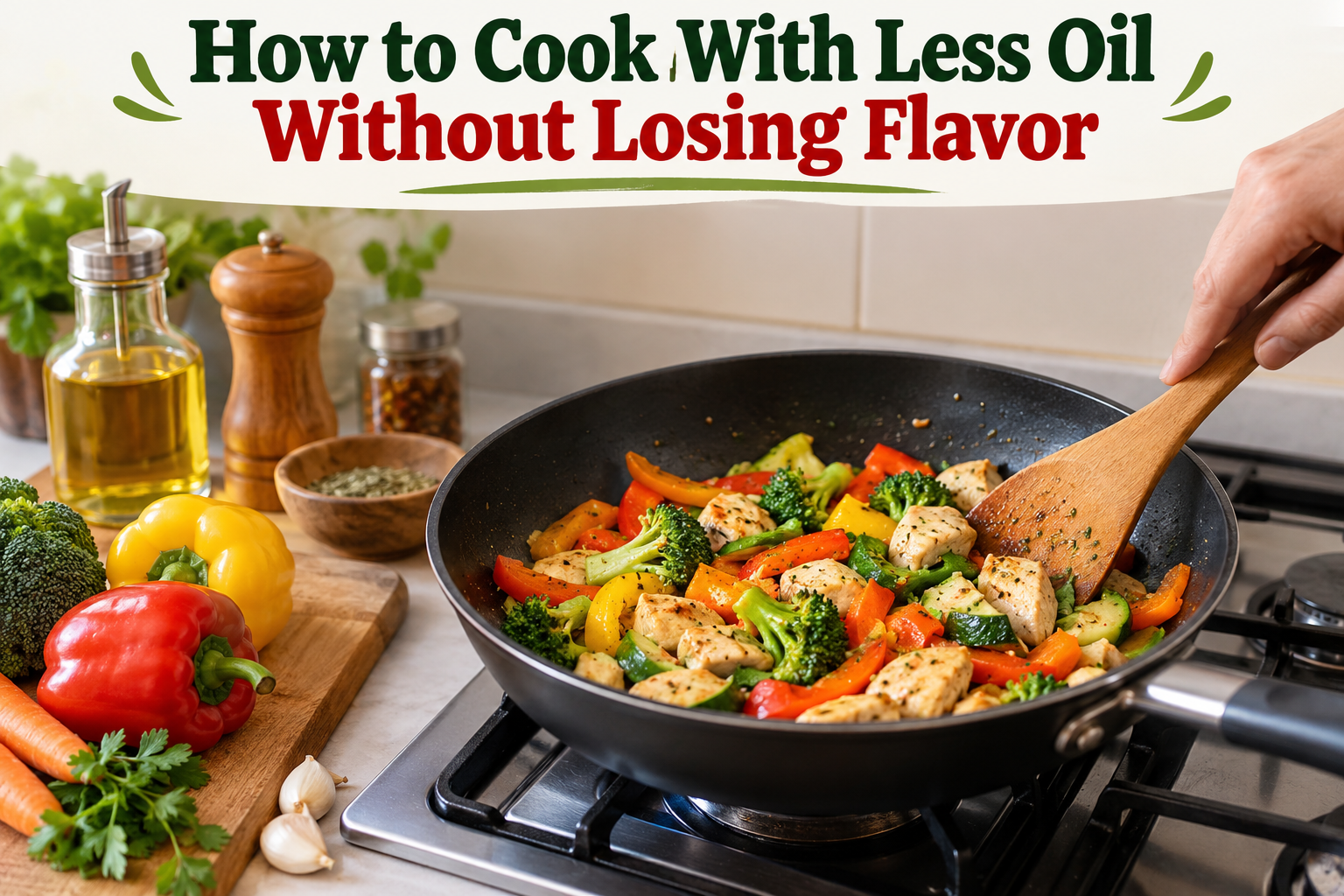
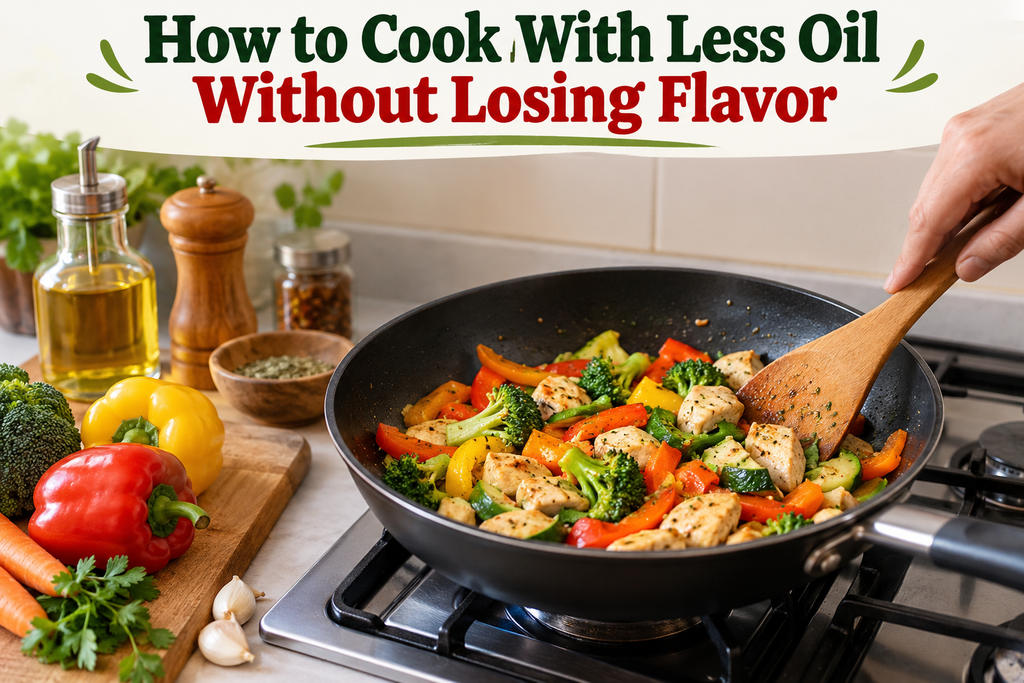
A quality nonstick pan can make cooking with less oil much easier. Foods such as eggs, vegetables, pancakes, fish, and chicken often require only a small amount of oil when cooked in a good pan.
Instead of covering the entire surface with oil, add a small amount and spread it around the pan using a cooking brush or spoon. This creates a thin layer that helps prevent sticking.
Medium heat is usually better than extremely high heat when using less oil. Very high temperatures can cause food to stick or burn quickly, especially when there is not much fat in the pan.
Allow the pan to warm before adding the ingredients. A properly heated pan helps food cook evenly and improves browning.
Replace Some Oil With Water or Broth
One of the easiest techniques for cooking with less oil is to use water or vegetable broth when sautéing.
When cooking onions, garlic, mushrooms, carrots, peppers, or other vegetables, start with a very small amount of oil. Once the vegetables begin to soften, add one or two tablespoons of water or broth if the pan becomes dry.
Continue adding small amounts as necessary.
Broth can be especially useful because it adds moisture and flavor at the same time. Homemade vegetable broth or a simple low sodium broth can make sautéed vegetables taste delicious without requiring much oil.
This method works particularly well for soups, curries, pasta sauces, rice dishes, and vegetable fillings.
Build Flavor With Onions and Garlic
Onions and garlic are two of the best ingredients for creating strong flavor without depending on oil.
Slowly cooking onions helps release their natural sweetness. Garlic adds a savory aroma that can transform simple vegetables, beans, rice, chicken, and sauces.
You do not need a large amount of oil to cook them. Start with about a teaspoon of oil and add a splash of water if the pan begins to dry.
Other flavorful ingredients such as ginger, green onions, shallots, and fresh chilies can also create a powerful base for a meal.
A flavorful base makes the entire dish taste richer, even when very little oil is used.
Use Herbs and Spices Generously
Spices are one of the most effective ways to cook with less oil without losing flavor.
Cumin, paprika, black pepper, turmeric, coriander, cinnamon, chili powder, oregano, basil, thyme, and rosemary can bring depth and personality to homemade food.
Fresh herbs are equally useful. Parsley, cilantro, mint, basil, dill, and rosemary can brighten a dish without adding fat.
Try experimenting with different combinations.
For roasted vegetables, paprika, black pepper, garlic, and oregano can create plenty of flavor.
For chicken, try cumin, coriander, garlic, lemon juice, and black pepper.
For lentils and beans, turmeric, cumin, garlic, ginger, and fresh herbs work beautifully.
Spices allow you to create strong flavor while keeping the amount of oil under control.
Add Flavor With Lemon and Vinegar
Acidic ingredients can make food taste fresher and more balanced.
Lemon juice, lime juice, apple cider vinegar, balsamic vinegar, and other vinegars can add brightness to meals that might otherwise taste heavy or flat.
A squeeze of lemon over grilled vegetables, fish, chicken, rice, or lentils can make a surprising difference.
Vinegar can also be used in homemade dressings. Many traditional salad dressings contain a large amount of oil, but you can create a lighter version by using more lemon juice or vinegar and less oil.
For example, combine lemon juice, a small amount of olive oil, mustard, black pepper, herbs, and a little honey. The result is a flavorful dressing that does not require several tablespoons of oil.
Roast Instead of Frying
Frying often requires a large amount of oil. Roasting can produce a similar golden and satisfying texture with much less.
Vegetables such as potatoes, cauliflower, carrots, zucchini, broccoli, and sweet potatoes taste excellent when roasted.
Cut the vegetables into similar sized pieces, season them well, add a small amount of oil, and spread them across a baking tray.
Avoid crowding the tray. When vegetables are packed too closely together, they release moisture and steam instead of becoming golden.
Roasting concentrates natural flavors and creates caramelized edges that make vegetables taste richer.
The same idea works for chicken, fish, chickpeas, and many other foods.
Try Baking Foods You Normally Fry
Many foods that are traditionally fried can also be baked.
Potato wedges, vegetable patties, chicken pieces, fish, and even some snacks can develop a crisp texture in the oven.
A light coating of oil can help with browning, but you usually need much less than you would for deep frying.
Breadcrumbs, crushed oats, ground nuts, or cornmeal can also create texture.
Baking may produce a slightly different result from traditional frying, but good seasoning can make the food equally enjoyable.
Use Natural Moisture From Vegetables
Many vegetables release water while cooking. Tomatoes, mushrooms, zucchini, spinach, onions, peppers, and eggplant all contain natural moisture.
Instead of adding oil immediately when the pan looks dry, give the vegetables a little time to release their own juices.
Tomatoes are particularly useful in curries and sauces. Once they soften, they create a rich base that reduces the need for additional oil.
Adding a small splash of water and covering the pan for a few minutes can also help vegetables soften naturally.
After removing the lid, cook for a little longer to allow excess moisture to evaporate and concentrate the flavor.
Use Yogurt in Marinades
Marinating meat can create tenderness and flavor without relying heavily on oil.
Plain yogurt works particularly well with chicken. Mix yogurt with garlic, ginger, lemon juice, black pepper, cumin, paprika, coriander, or other favorite spices.
Allow the chicken to absorb the marinade before cooking.
Yogurt helps spices stick to the food and keeps the meat moist during cooking. This makes it possible to grill, bake, or pan cook chicken with very little added oil.
Lemon juice and herbs can also be used for lighter marinades.
Steam Food and Add Flavor Afterwards
Steaming is one of the simplest cooking methods that requires no oil.
Vegetables, fish, dumplings, and some chicken dishes can be steamed and then seasoned after cooking.
The secret is to avoid serving steamed food completely plain.
Add fresh herbs, lemon juice, black pepper, garlic, chili flakes, yogurt sauce, mustard, or a small amount of flavorful dressing after cooking.
This gives the food personality without requiring oil during the cooking process.
Grill for Strong Natural Flavor
Grilling creates deep flavor through browning and light charring.
Vegetables such as peppers, zucchini, corn, eggplant, onions, mushrooms, and tomatoes develop a wonderful taste when grilled.
Chicken and fish are also excellent choices.
Because grilling creates strong roasted flavors naturally, you do not need much oil. A light brush can be enough to prevent sticking.
Season the food before grilling and finish with lemon juice, herbs, or a fresh sauce.
Make Sauces Without Too Much Oil
Sauces can secretly add a lot of oil to a meal.
Instead of making every sauce with an oil heavy base, experiment with yogurt, tomatoes, roasted vegetables, beans, tahini in moderate amounts, herbs, mustard, and citrus juice.
A simple yogurt sauce made with yogurt, garlic, lemon juice, herbs, and black pepper works well with vegetables, chicken, wraps, and rice.
Tomato based sauces are also naturally flavorful and usually require only a small amount of oil.
Blended roasted peppers, tomatoes, onions, and garlic can create a thick, flavorful sauce without needing large quantities of fat.
Measure Oil Instead of Pouring It
This may be the most practical habit of all.
Pouring oil directly from the bottle makes it difficult to know how much you are using. What looks like a small amount may actually be several tablespoons.
Use a teaspoon or tablespoon instead.
For everyday cooking, start with the smallest amount possible. You can always add a little more if the food genuinely needs it.
A cooking brush can also help spread a teaspoon of oil across a large surface.
Over time, measuring oil becomes a natural habit.
Do Not Forget Texture
Flavor is important, but texture also affects how satisfying a meal feels.
If reducing oil makes a dish feel too soft, add texture in another way.
Try toasted seeds, chopped nuts, fresh vegetables, roasted chickpeas, crispy onions prepared in the oven, or crunchy herbs and greens.
Even a small amount of nuts or seeds can make a meal feel more interesting.
Contrast is useful. A soft lentil dish becomes more satisfying with fresh cucumber on the side. Creamy yogurt tastes more interesting with herbs and toasted seeds. Roasted vegetables become brighter with fresh lemon juice.
Let Ingredients Develop Color
Browning creates flavor.
When cooking vegetables, chicken, mushrooms, or other foods, avoid stirring constantly. Allow the ingredients to remain in contact with the hot pan long enough to develop some color.
A golden surface creates deeper flavor through natural browning.
This is especially important when cooking with less oil because good browning can provide some of the richness that people often associate with fatty foods.
Just keep the temperature controlled so the food browns rather than burns.
Choose Flavorful Ingredients
Fresh, good quality ingredients need less help to taste delicious.
Ripe tomatoes, fresh herbs, aromatic spices, fresh garlic, seasonal vegetables, good quality beans, and fresh citrus fruits can make simple meals taste excellent.
When ingredients already have strong natural flavors, there is less need to depend on large amounts of oil.
This is one reason why seasonal cooking can be so enjoyable. Fresh produce often has better flavor and texture.
Reduce Oil Gradually
If you usually cook with a lot of oil, there is no need to change everything at once.
Start by reducing the amount slightly.
If a recipe normally uses four tablespoons, try three. Next time, try two and see whether you still enjoy the result.
Gradual changes help you learn which dishes genuinely need oil and which ones taste just as good with much less.
You may discover that some recipes need only a fraction of the amount you previously used.
Final Thoughts
Learning how to cook with less oil without losing flavor is mainly about understanding how flavor works. Oil is only one part of good cooking. Spices, herbs, citrus juice, vinegar, garlic, onions, browning, roasting, grilling, and fresh ingredients can all make meals exciting and satisfying.
You do not have to remove oil completely. A small amount used carefully can improve texture and help ingredients cook properly. The important thing is to avoid using more than the food actually needs.
Start by measuring your oil, using a good pan, experimenting with broth or water for sautéing, and adding more herbs and spices. Try roasting or baking foods that you normally fry. Use lemon juice, yogurt, garlic, and fresh herbs to bring extra flavor to simple dishes.
With practice, cooking with less oil becomes easy. More importantly, your meals can still feel comforting, colorful, flavorful, and enjoyable. Good cooking is not about using the most oil. It is about understanding ingredients and using simple techniques that bring out their best natural taste.